Skip to content
Dark glass office tower at dusk with its lit floors showing

Selling at Auction

Selling Commercial Property at Auction

Updated November 21, 2026

Start seller intake
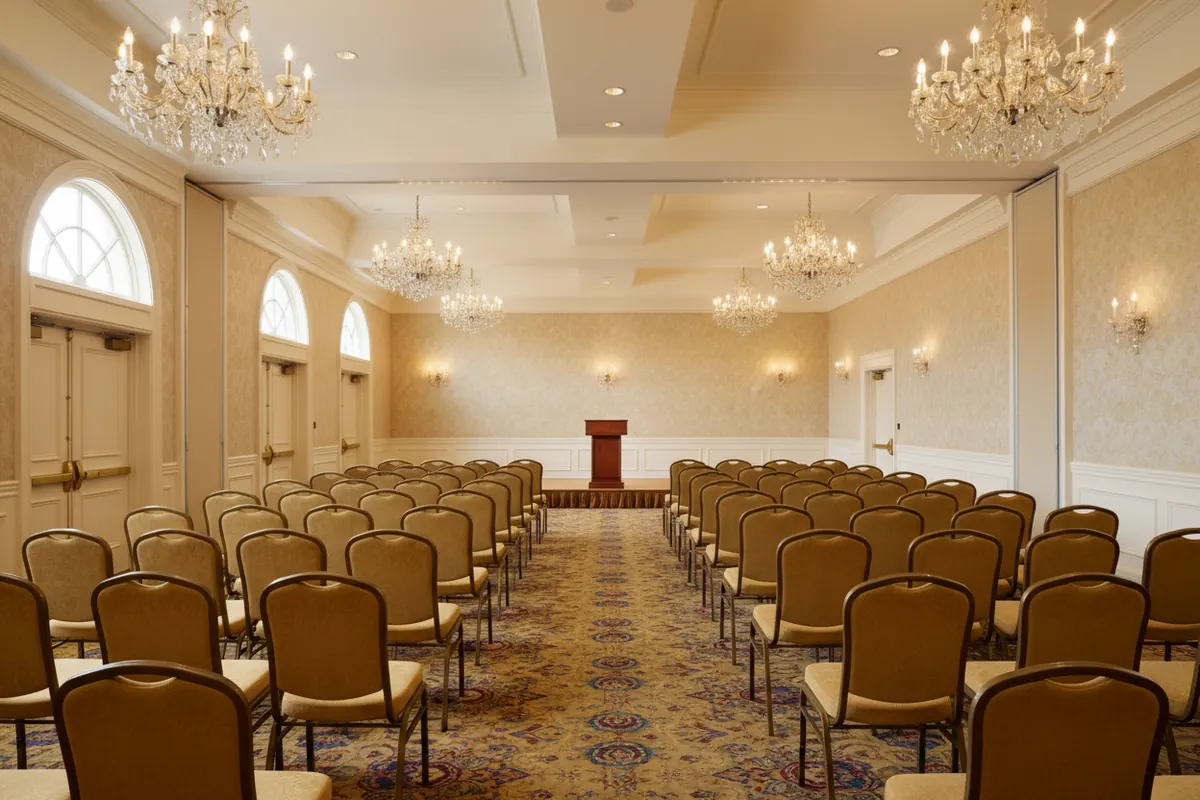
Rows of empty chairs facing a lectern in a ballroom set for an auction.
Immediate answer

California commercial auctions: reserve vs. absolute formats, who needs a real estate license, the seller-bid notice rule, and the hazardous-substance notice owed.

On this page
  1. What a Commercial Property Auction Means for an Owner
  2. Who Must Hold a Real Estate License to Conduct the Auction
  3. Bidding Rules and the Seller's Disclosure Duties at Auction
  4. How Auction Compares to a Traditional Listing for a Commercial Seller
  5. Contingencies, Inspection and the Auction Agreement
  6. Common Mistakes Sellers Make When Choosing an Auction
  7. What to Do Next
  8. Frequently asked questions
  9. Sources

A California commercial building can be sold at auction, where buyers bid against each other on a set date under terms the seller agrees to in advance. California law requires a real estate license for soliciting and negotiating the sale, limits bids placed for the seller, and keeps the owner's environmental notice duty in place.

An owner of an office building, a warehouse, a retail center or an owner-occupied shop who is thinking about an auction is usually trying to answer a practical question: does a fixed sale date and open bidding fit this building, its tenants and its income better than a listing would? The idea of a single bidding day can sound clean, yet it brings its own rules, costs and risks. This guide explains how a commercial auction works for the seller in California, who has to hold a license to run it, what the law says about bidding and disclosure, and how an auction compares with a traditional listing.

What a Commercial Property Auction Means for an Owner

An auction is a sale in which the price is set by competitive bidding rather than by back-and-forth negotiation with one buyer. For the seller, the most important choice is the format.

In a reserve auction, the seller sets a minimum price, called the reserve. If bidding does not reach it, the property does not sell. In an absolute auction, the property sells to the highest bidder no matter how high or low that bid is. A reserve auction keeps a floor under the price but leaves the possibility that the building comes back unsold. An absolute auction removes that possibility and puts the price entirely in the hands of the bidders who show up.

The seller sets these terms before bidding opens, not after. The format, the bidding rules, the deposit a winning bidder must post and the closing schedule are agreed in advance and announced to bidders. The California Department of Real Estate's bulletin on auctions says a seller using the auction process must clearly disclose to all potential buyers, among other things, the type of auction, the bidding rules and methods, and the qualifications, restrictions and disclaimers being used for the sale (California Department of Real Estate, Real Estate Bulletin, Winter 2008).

That bulletin was published in 2008. It remains the Department's published discussion of auctions relied on here, but because it is dated, whether more recent Department of Real Estate guidance has updated or superseded any part of it is worth confirming with the Department or a professional.

The format also shapes who comes. An absolute auction tends to draw bidders who see a chance at a bargain, while a reserve may keep some away. For an owner, the format decides how much risk stays with the seller and how much moves to the bidding room.

Who Must Hold a Real Estate License to Conduct the Auction

Business and Professions Code section 10130 makes it unlawful for any person to engage in the business of, act in the capacity of, advertise as, or assume to act as a real estate broker or real estate salesperson in California without first obtaining a real estate license from the Department of Real Estate. The statute lets the Real Estate Commissioner bring a complaint in court and makes each county's district attorney responsible for prosecuting violations.

Business and Professions Code section 10131 defines a real estate broker as a person who, for compensation or in expectation of compensation, does or negotiates to do certain acts for another, including selling or offering to sell, buying or offering to buy, soliciting prospective sellers or buyers, soliciting or obtaining listings, or negotiating the purchase, sale or exchange of real property. The list continues with leasing, loan and note activities.

The Department of Real Estate's bulletin applies these rules to auctions. It says a license is not required for people who simply "cry" or "call" an auction unless they do more in connection with the sale, but that a California real estate license is required to solicit sellers and buyers, to negotiate the price established through the auction, the sale contract and related documents after bidding ends, and that a real estate licensee must therefore be on site during the calling. It adds that advertising or cold-calling designed to get someone to buy or sell through an auction is solicitation that requires a license, that internet auction activity follows the same rules, and that a license from another state is not sufficient because California has no reciprocity with any other state.

For an owner, this means the company that markets the building, finds bidders and negotiates the contract for a fee needs a California real estate license, and its status can be checked through the Department of Real Estate's website before an auction agreement is signed.


Bidding Rules and the Seller's Disclosure Duties at Auction

Civil Code section 1812.610 applies to auctions of real property. It says an auctioneer shall not state that an increased bid greater than the last highest bid has been made when, in fact, no one made one. The statute uses its own definition of an auctioneer: anyone who calls for, recognizes and accepts offers to buy real property at an auction, or holds out as available to do so.

"an auctioneer or another authorized person may place a bid on the seller's behalf during an auction of real property that would not result in a sale of the real property, if both of the following are true: (1) Notice is given to all auction participants, including all other bidders, that liberty for that type of bidding is reserved and that type of bid will not result in the sale of the real property. (2) The person placing that type of bid contemporaneously discloses to all auction participants, including all other bidders, that the particular bid has been placed on behalf of the seller."

For online auctions, the statute treats notice as given when that information appears in the site's terms of service or equivalent policy and is conspicuously posted on the bidding page or through a clearly marked link or icon that the statute describes.

For a seller, this means any plan to have bids placed on the seller's behalf has to be announced to every bidder in advance and identified as a seller bid when it is made, and such a bid cannot produce a sale.

Health and Safety Code section 78700 sets the environmental duty. An owner of nonresidential real property who knows, or has reasonable cause to believe, that a release of hazardous substance has come to be located on or beneath the property must give written notice of that condition to the buyer before the sale. An owner who fails to give required notice is subject to actual damages and other remedies provided by law, and an owner with actual knowledge of a release of a material amount who knowingly and willfully fails to give notice is liable for a civil penalty not to exceed five thousand dollars ($5,000) for each separate violation.

For a seller at auction, the notice duty is the same as in any other sale of nonresidential property: the auction format does not change it. The Department of Real Estate's bulletin also says that, as with other real estate sales, all known defects affecting the value or desirability of an auctioned property must be disclosed.

How Auction Compares to a Traditional Listing for a Commercial Seller

A known sale date is the auction's defining feature. Marketing runs over a set window, bidders arrive on a set day, and the terms are fixed before anyone bids. A listing with a real estate agent works on an open timeline: the property stays on the market until a buyer and the seller agree on price and terms.

Auction rooms often draw investors and buyers paying cash who accept the building in its present condition. That can help when a building has deferred maintenance, vacancy or a complicated rent picture. The trade is real: an offer from a buyer who takes on repairs, risk and the cost of reselling is often lower than an open-market price, and what the seller gains is less preparation, fewer showings and less dependence on a buyer's loan. A well-attended auction with several committed bidders can push the price up; a thinly attended one may not, and in an absolute auction the seller accepts whatever the room produces.

Costs differ too. Auction agreements may include seller-paid marketing charges and an auctioneer's commission, and these are terms to understand in writing before signing. A listing usually involves a commission as well, plus the carrying costs of a longer marketing period.

Comparing estimated net proceeds for each path, meaning the expected price less commissions, fees, repairs, carrying costs, loan payoffs and closing costs, is how an owner tells which channel fits a particular building. How the rules above apply depends on the facts of the property and the agreement, and an attorney or a CPA can review the questions that turn on them.

Contingencies, Inspection and the Auction Agreement

A listing leaves room to negotiate price and to agree on contingencies, such as inspection or financing conditions. Auction terms often call for a sale with few or no contingencies on a fixed schedule, though the agreement decides this.

Because the terms are fixed before bidding, much of what a buyer would ordinarily investigate during a negotiated sale tends to happen before the auction date instead. The Department of Real Estate's bulletin notes that properties offered at auction are often made available for inspection by prospective buyers before the auction. For the seller, this shifts the work forward: the disclosures, the environmental notice and the property information bidders rely on generally need to be ready before marketing begins, since there may be little or no room afterward to address a buyer's questions through a contingency.

The auction agreement is where these points are set out, including whether any contingency survives the bidding, how long any review period runs, and what happens if a winning bidder does not close. Those terms vary by agreement and are part of what an owner reads closely before signing.

Common Mistakes Sellers Make When Choosing an Auction

An owner preparing a building for auction can run into problems that have little to do with the bidding itself. These situations come up often enough to name.

  • An unchecked license. An agreement gets signed with a company whose California real estate license status was never confirmed. The licensing rule discussed above applies to the solicitation and negotiation the company performs.
  • A missed hazardous-substance notice. Known contamination goes unmentioned before the auction date. The notice duty discussed above applies before the sale, whatever the method of sale.
  • An unclear format. The owner signs without knowing whether the auction is reserve or absolute. That choice decides whether the building can come back unsold or must sell at the high bid.
  • Fees left out of the math. Marketing charges and the auctioneer's commission are missing from the net-proceeds estimate. These costs come out of the seller's side of the sale.
  • Assuming "as-is" ends disclosure. An owner treats a present-condition sale as erasing the duty to disclose. It does not: the bulletin's disclosure point and the statutory notice duty both still apply.
  • Unannounced seller bidding. A plan to protect the price with bids on the seller's behalf is never disclosed to bidders. The seller-bid conditions discussed above require both the advance notice and the contemporaneous disclosure.

What to Do Next

Three sets of papers tend to frame an auction decision. The first is the auction company's license record, which the Department of Real Estate's website lets anyone look up. The second is the owner's environmental file: prior site assessments, agency correspondence and any record of a known release, which together form the starting point for the Health and Safety Code section 78700 notice. The third is the draft auction agreement itself, particularly its fee and commission terms, its contingency terms and whether it sets a reserve or an absolute sale, which are the terms an attorney typically reviews before signing.

With those three in one place, the license check, the notice and the agreement review can be completed before anything is signed.

How it works

A structured process, not a sales pitch

Describe your commercial property — asset type, size, occupancy, location and timeline — to clarify your selling path.

The seller intake

  1. Describe the asset

    Type, size, occupancy, location and timeline — six short steps.

  2. Clarify the path

    Listed, off-market, direct cash or sale-leaseback, based on fit.

  3. Connect by consent

    Information is shared only if you expressly agree.

Start Seller Intake

Seller intake

Six questions to clarify your selling path.

Asset, size, occupancy, location and timeline. Nothing is shared without your express consent.

Begin intake

Contact

Discuss your property

Contact details and consent

See the Privacy Policy and Terms.

Testimonials

Selling the warehouse without months of marketing was appealing to our ownership group.

J.R., Miami, FL

Frequently asked questions

Does a California commercial property auction require a real estate license?

Yes, for the parts of the work that involve soliciting sellers and buyers or negotiating the price and contract. The Department of Real Estate's bulletin draws a line: someone who only calls the bids may not need one, but the company running the sale does, and a license from another state does not count in California.

What is the difference between a reserve auction and an absolute auction for a commercial seller?

A reserve auction lets the seller decline to sell if bidding stops below a set minimum; an absolute auction commits the seller to the highest bid. For a building with steady leases and income, the format mainly decides who carries the price risk: the seller with a reserve, the bidding room without one.

Can a seller bid on their own property at a California auction?

Only within the limits of Civil Code section 1812.610, and such a bid cannot produce a sale. In practice, the auction agreement and the announced bidding rules show whether seller bidding is reserved and how bidders will be told.

Does selling at auction change a commercial owner's disclosure duties in California?

No. The sale method does not change the Health and Safety Code section 78700 notice. A buyer who accepts the building in its present condition is accepting the condition, not giving up the written notice the statute requires of a nonresidential owner who knows or has reasonable cause to believe a release occurred.

What costs does a seller typically pay in a commercial property auction?

The auction agreement sets them, and they may include marketing charges and an auctioneer's commission, alongside ordinary closing costs and any loan payoff. Some charges may be owed even if the building does not sell, depending on the agreement. A CPA or an attorney can help estimate what the owner nets.

How does auction compare to listing with a broker for a California commercial seller?

The difference is mainly control. An auction fixes the date and terms in advance and lets bidders set the price; a listing lets the seller negotiate each offer and its conditions over time. Which suits a building depends on its tenants, condition and the owner's own schedule.

Where can a California commercial property owner check an auctioneer's real estate license?

The California Department of Real Estate's website provides license look-up. Checking the name on the auction agreement, and the name of the person negotiating the contract, against those records shows whether each holds a current California real estate license.

Sources

Statutes, regulations and court sources

  1. 01California Civil Code section 1812.610 · California Legislative Information
  2. 02California Business and Professions Code section 10130 · California Legislative Information
  3. 03California Business and Professions Code section 10131 · California Legislative Information
  4. 04California Health and Safety Code section 78700 · California Legislative Information

Other sources

  1. 05California Department of Real Estate, Real Estate Bulletin, Winter 2008: Real estate auctions - licensing requirements and other matters · dre.ca.gov