

Skip to content
Dark glass office tower at dusk with its lit floors showing

Net Lease (NNN) Property

Selling a Net Lease (NNN) Property

Updated November 21, 2026

Start seller intake
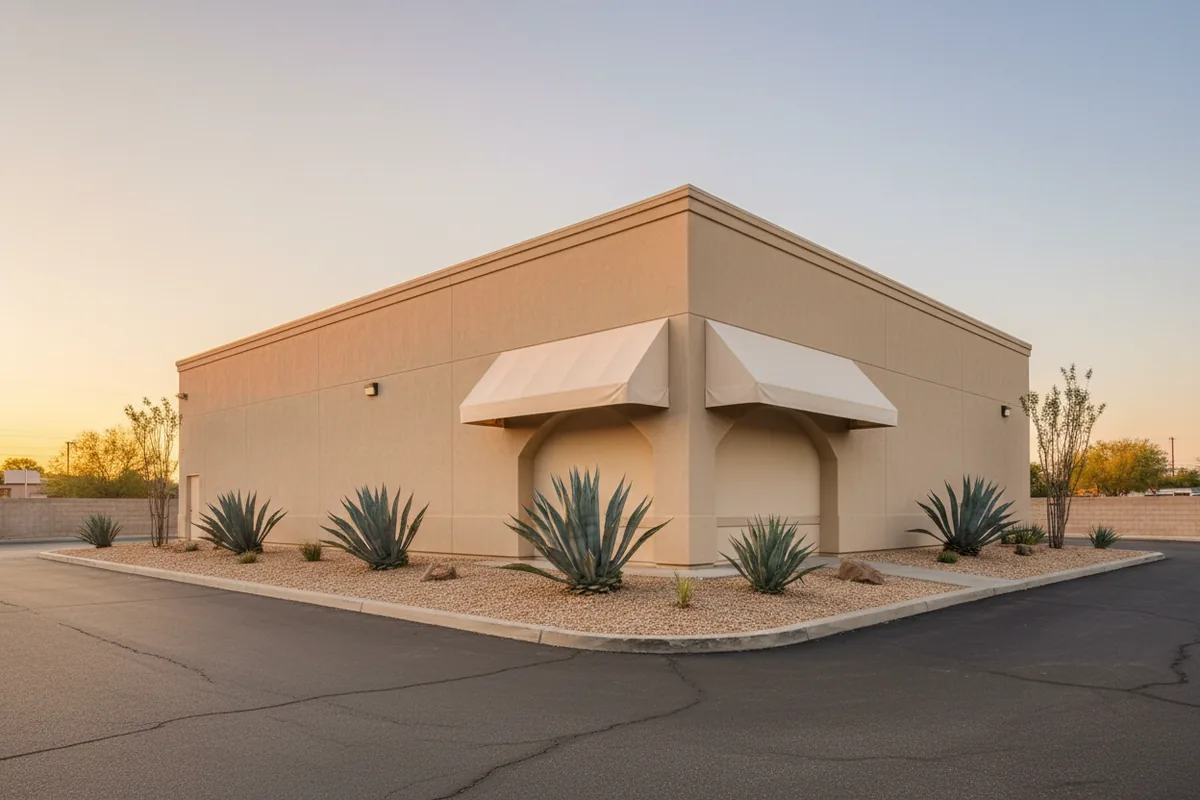
A freestanding single-tenant building on a corner pad, one lease carrying the whole property.
Immediate answer

How a California NNN property sale works: the 35-year lease rule for reassessment, the tenant's deposit at transfer, the CASp lease statement, and business property tax.

On this page
  1. What a Triple Net Lease Means for an Owner Who Is Selling
  2. How the Remaining Lease Term Affects Property Tax at Sale
  3. The Tenant's Security Deposit When the Landlord's Interest Is Sold
  4. The Accessibility Statement on a Commercial Lease
  5. How Buyers Read the Income a Net Lease Produces
  6. Selling a Net Lease Property as Business Property: Depreciation and Tax Treatment
  7. Options and Trade-offs When Selling a Net Lease Property
  8. Frequently asked questions
  9. Sources

When you sell a single-tenant net lease property in California, the buyer is buying the lease as much as the building. The years left on the lease decide whether the property is reappraised for property tax. The tenant's deposit has to be handed over or returned. The rent, tenant strength and increases shape how buyers value it.

You own a commercial building with one tenant who pays the rent and also carries the taxes, insurance and upkeep, and now you are thinking about selling. The questions in front of you are practical ones. What will a buyer look at first? What does California law attach to a leased building when it changes hands? What happens to the tax on your gain? This guide walks through each of those points for a California owner selling commercial property, stating each rule as the California code text or the official page states it.

What a Triple Net Lease Means for an Owner Who Is Selling

A triple net lease, often written NNN, is a lease under which the tenant pays base rent plus the property taxes, the insurance premiums and the maintenance costs. The owner receives rent that is "net" of those operating costs.

A gross lease works the other way. The tenant pays only the base rent, and the owner pays the operating costs out of that rent. The difference matters at sale because a buyer of an NNN property is reading a cleaner income stream, one where most expenses already sit with the tenant.

In a single-tenant net lease sale, the buyer acquires two things at once: the real property and the income the lease produces. The lease does not end at closing. Its term, rent schedule, renewal options and conditions travel with the building to the new owner.

When a buyer opens the lease, the first questions tend to be how many years of rent are left before the tenant can leave or must renew, how able the tenant is to keep paying, and whether and how the rent rises over the term. No single figure answers those questions for every building, which is why they are described here in words rather than numbers.

How the Remaining Lease Term Affects Property Tax at Sale

Thirty-five years is the line California property tax law draws for leased property. Under Rev. & Tax. Code section 61, a change in ownership generally includes "the creation of a leasehold interest in taxable real property for a term of 35 years or more (including renewal options)." It also includes "any transfer of a lessor's interest in taxable real property subject to a lease with a remaining term (including renewal options) of less than 35 years." The lessor is the landlord, which here means you.

The other side of the line sits in Rev. & Tax. Code section 62. A change in ownership does not include "any transfer of a lessor's interest in taxable real property subject to a lease with a remaining term (including renewal options) of 35 years or more."

Put plainly, if fewer than 35 years remain on the tenant's lease, counting renewal options, your sale is a change in ownership. If 35 years or more remain, it is not.

The State Board of Equalization's Property Tax Rule 462.100, Change in Ownership—Leases adds several details:

  • Renewal options. The lease term is calculated to "include written renewal options."
  • Reappraisal. Once a change in ownership is deemed to occur, "the entire property subject to the lease is reappraised (i.e., the value of both the lessee's interest and the reversion)."
  • Multiple leases. Where a building has several leases, some under 35 years remaining and some at 35 or more, the change in ownership applies to "the portion of the property subject to the lease(s) with a remaining term of less than 35 years."

The remaining term, then, is more than a pricing point. It decides whether a buyer keeps the current assessed value or faces a new one. The county assessor's office can confirm the property's current assessed value, and a tax professional can say how these rules apply to a particular sale.

The Tenant's Security Deposit When the Landlord's Interest Is Sold

A security deposit is money a commercial tenant pays to secure its performance under the lease. Under Civil Code section 1950.7, the landlord holds that deposit "for the tenant." When the landlord's interest ends, "whether by sale, assignment, death, appointment of receiver or otherwise," the landlord or the landlord's agent must, within a reasonable time, do one of two things:

  1. Transfer the remaining deposit, after lawful deductions, to the successor. The landlord must then notify the tenant of the transfer, of any claims made against the deposit, and of the new owner's name and address. The notice goes by personal delivery or certified mail.
  2. Return the remaining deposit to the tenant.

Either step relieves the selling landlord of further liability for the deposit. A buyer who receives the deposit takes on "all of the rights and obligations of a landlord holding the payment or deposit." The statute also provides that bad faith retention may expose a landlord or transferee to damages not to exceed $200, in addition to any actual damages.

For a seller, the deposit is a closing item, not money the seller keeps once the building changes hands. How much the deposit is, and which deductions apply, depends on the lease and on this statute.

The Accessibility Statement on a Commercial Lease

A CASp is the inspector named in Civil Code section 1938. That section describes a CASp as someone who "can inspect the subject premises and determine whether the subject premises comply with all of the applicable construction-related accessibility standards under state law."

The section requires a commercial property owner or lessor to state "on every lease form or rental agreement executed on or after January 1, 2017, whether or not the subject premises have undergone inspection" by a CASp. Where no disability access inspection certificate has been issued, the lease must carry the statement the statute quotes. That statement includes the line that "state law does not require a CASp inspection of the subject premises."

The section defines "commercial property" for this purpose as property offered for lease to operate a place of public accommodation, or a facility to which the general public is invited. Whether a particular net lease building fits that definition depends on its use.

Because the lease passes to the buyer, so does its accessibility statement. If the lease carries the statement, a seller can locate it. If the lease was signed before 2017 or the statement is missing, a buyer's due diligence is likely to find that out.

How Buyers Read the Income a Net Lease Produces

Income is where a net lease buyer's valuation starts. The State Board of Equalization's appraisal lesson, Lesson 8 - Capitalization: Converting an Income Stream into Value, says that "capitalization is any method used to convert an income stream into value." The lesson names two primary methods.

  • Direct capitalization converts "a single year's income expectancy into an indication of value in one direct step."
  • Yield capitalization discounts future benefits and "explicitly considers the size, shape, and duration of the income stream."

The lesson lists the key variables as the income, the rate or factor used to convert it, and the time period over which the income is to be realized.

In a net lease, those variables map onto the lease itself. The net rent is the income. The remaining term and any renewal options set the period. The tenant's financial strength affects how much risk a buyer sees in that income. Escalations, whether fixed steps or tied to an index, change the shape of the rent over time. A long lease with a strong tenant and built-in increases reads differently from a short lease nearing its end, even when this year's rent is the same.

An appraiser sets a value for a specific property. For an owner, the practical point is that a buyer will ask for the lease, the rent history and the tenant's payment record.

Selling a Net Lease Property as Business Property: Depreciation and Tax Treatment

A building used in a trade or business, or held for investment, falls under the federal rules for selling business property. IRS Publication 544, Sales and Other Dispositions of Assets explains how gain or loss on those sales is figured. It also explains how gain on property that has been depreciated may be treated partly as ordinary income.

Depreciation is the yearly deduction an owner takes for the wear of a building over the years it is held. When the building sells, part of the gain connected to that depreciation may be taxed as ordinary income rather than as capital gain. How much depends on the depreciation taken, the sale price and the owner's own tax picture.

A like-kind exchange, often called a 1031 exchange, is a federal tax option under which an owner who reinvests in qualifying replacement property may defer recognizing gain. The exchange has its own federal requirements, including timing requirements, and whether a given sale qualifies is a fact-specific question.

The answer for any owner depends on the facts and the law that applies to them. A CPA, an enrolled agent or a tax attorney reviews the tax consequence of a specific sale.

Options and Trade-offs When Selling a Net Lease Property

There are three common paths for selling a net lease building. None of them is the right answer for every owner.

Listing with a commercial real estate broker. A listing puts the property in front of the open market, which can reach more buyers and may bring a higher price. The costs are commissions, time on the market, and reliance on a buyer whose loan has to close.

Selling directly to one buyer without a broker. A buyer who pays without a financing contingency usually prices in the work and risk it is absorbing: any repairs, the chance the tenant leaves, and the cost of reselling later. That is why a direct offer often comes in below what an open-market sale might bring. In return, the seller gets less preparation, fewer tours of the building and less dependence on a lender's approval.

Carrying back financing. In a carryback, the seller lends part of the price and the buyer pays the seller over time. This can widen the pool of buyers, but the seller keeps a stake in the buyer's ability to pay.

These paths are easiest to compare on paper: written offers set side by side, each with estimated net proceeds, meaning the price less commissions, repairs, carrying costs, loan payoffs and closing costs. If a buyer, a tenant or a co-owner is in an open dispute with the owner, that contested matter belongs with an attorney.

Many owners begin by gathering the signed lease with all amendments, the tenant's rent and payment history, the deposit records, and the current assessed value from the county assessor. Those are the papers any buyer or broker will ask to see.

How it works

A structured process, not a sales pitch

Describe your commercial property — asset type, size, occupancy, location and timeline — to clarify your selling path.

The seller intake

  1. Describe the asset

    Type, size, occupancy, location and timeline — six short steps.

  2. Clarify the path

    Listed, off-market, direct cash or sale-leaseback, based on fit.

  3. Connect by consent

    Information is shared only if you expressly agree.

Start Seller Intake

Seller intake

Six questions to clarify your selling path.

Asset, size, occupancy, location and timeline. Nothing is shared without your express consent.

Begin intake

Contact

Discuss your property

Contact details and consent

See the Privacy Policy and Terms.

Testimonials

Selling the warehouse without months of marketing was appealing to our ownership group.

J.R., Miami, FL

Frequently asked questions

What is the difference between a NNN lease and a gross lease?

The difference is who carries the operating costs. Under a triple net lease, the tenant pays taxes, insurance and maintenance on top of rent; under a gross lease, the owner pays them from the rent. For a seller, this shapes the conversation with buyers: with a net lease, the buyer focuses on the tenant and the lease terms, while with a gross lease, the buyer also has to study the owner's expense history.

How does the remaining lease term affect a sale in California?

Beyond the 35-year line itself, two details often surprise owners. First, written renewal options count toward the term, so a short base term with long options can land on the other side of the line. Second, when a change in ownership occurs, the entire property subject to the lease is reappraised, not just the landlord's share. In a building with several leases, only the portion under leases with less than 35 years remaining is treated as changing ownership.

What happens to the tenant's security deposit when I sell?

In practice, the purchase contract and the closing statement usually show the deposit as a credit to the buyer, so the figure on the closing statement is worth matching against the lease and the deposit records. If the deposit goes to the buyer, the tenant's notice also has to name any claims made against the deposit, which means any deductions the seller is taking need to be settled before that notice goes out.

Does a CASp inspection statement on the lease affect the sale?

It can, because the buyer takes the lease as it stands. A missing statement on a lease signed on or after January 1, 2017, or an old inspection report, is the kind of item that may come up in the buyer's review and lead to questions before closing. Whether the statement is required at all depends on whether the building's use fits the statute's definition of commercial property.

What is depreciation recapture and does it apply when I sell a NNN property?

Depreciation recapture is the treatment of part of the gain on depreciated property as ordinary income. Whether it applies to a given sale turns on the depreciation actually claimed over the years, so the answer sits in the owner's records rather than in the lease. Past tax returns and depreciation schedules are what a CPA or enrolled agent would look at to answer it.

What is a 1031 exchange and how does it relate to selling a NNN property?

A 1031 exchange is a federal option to defer gain by moving the proceeds into like-kind replacement property. Net lease buildings sometimes appear on both sides of an exchange, as the property sold and as the replacement, because their income tends to be predictable. The exchange carries its own timing and procedural requirements, and a tax professional confirms whether a particular sale qualifies and what steps the exchange requires.

How do buyers calculate the value of a NNN property?

Buyers generally convert the lease's net income into a value. The State Board of Equalization lesson notes that direct capitalization relies on rates and multipliers drawn from comparable sales, while yield capitalization discounts each future benefit and is also known as the discounted cash flow model. That is why two leases with equal rent can produce different values if the terms, tenants or increases differ. An appraiser provides a value for a specific building.