Skip to content
Corrugated metal factory hall with a sawtooth roof and an empty concrete apron

Distressed Commercial

Sell a Distressed Commercial Property

Updated November 21, 2026

Start seller intake
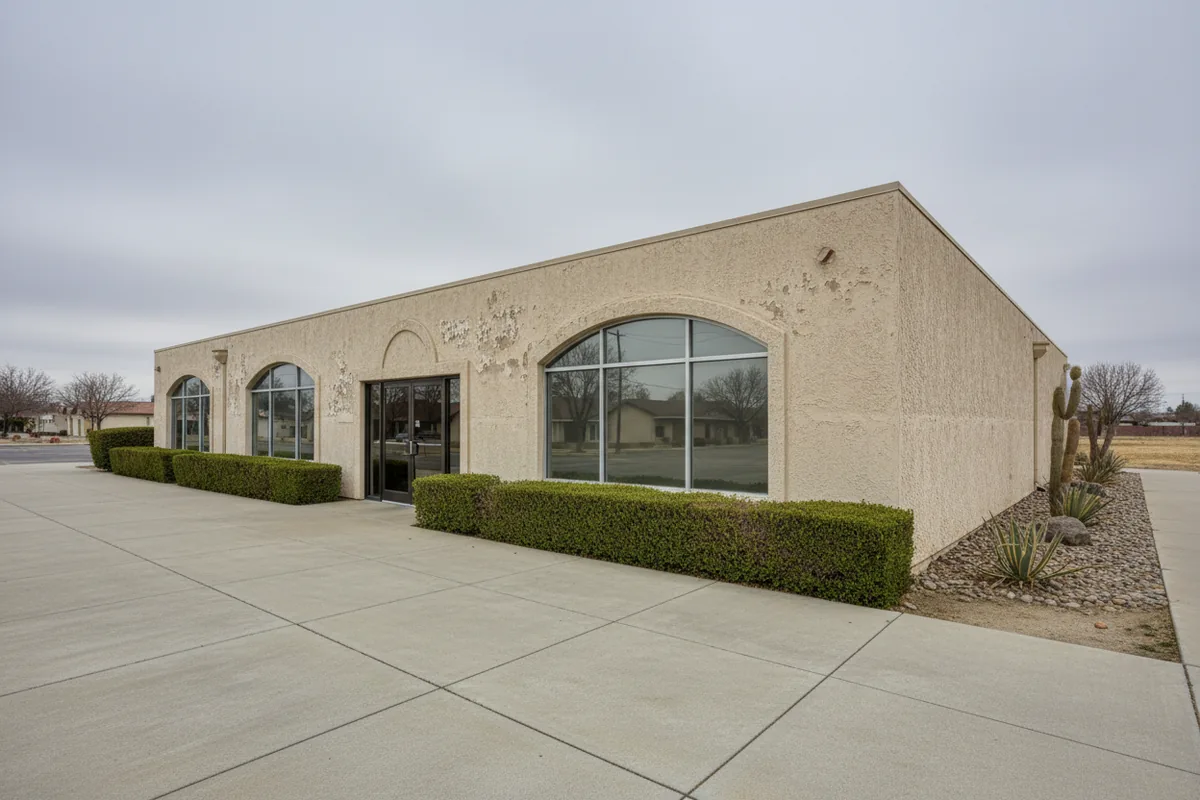
A quiet stucco commercial building with a swept walkway, held through a hard stretch.
Immediate answer

How California's notice of default, one-action rule, no-deficiency rule and hazardous substance notice shape the sale of a distressed commercial building.

On this page
  1. What It Means for Owners
  2. Who It Affects When an Owner Sells
  3. Rules, Disclosures and Fine Print
  4. Options and Trade-offs for an Owner Selling
  5. Common Mistakes Before Selling a Distressed Building
  6. Next Steps and Who Handles Each Part
  7. Frequently asked questions
  8. Sources

A distressed commercial property in California can be sold, whether the strain comes from a maturing loan, empty suites, deferred repairs, a code order or a dispute among owners. The sale still runs on the same rules: the owner of record signs, the lender's payoff or foreclosure steps apply, and a known hazardous substance release must be disclosed in writing before the sale.

An owner of an office building, a retail center, a warehouse or an owner-occupied shop may be facing a loan that comes due before a refinance is lined up, a tenant who has left, or a roof and parking lot that have waited too long. The questions are practical ones: what a buyer will see in this building, what California law requires along the way, and which ways of selling exist. Silver Lining Commercial Properties is a California website for owners selling commercial property. This page covers the asset, its tenancy and income, the rules and disclosures, and the owner's options, in that order.

What It Means for Owners

"Distressed" describes a condition, not a legal status. No statute declares a building distressed. The word is shorthand for pressure on the property or its owner, such as a loan reaching maturity or in default, significant vacancy, deferred maintenance, an open code or building-department issue, or a disagreement among owners about what to do.

The label matters because of how a buyer reads the building. A buyer of an office, retail, warehouse, industrial, mixed-use or owner-occupied commercial property looks past the asking price to four things:

  • Income. Whether rent is coming in, from whom, and how secure it is.
  • Leases. How long they run, who pays which expenses, and what rights tenants hold.
  • Physical condition. What repairs a new owner inherits.
  • Title and history. Whether liens, recorded notices or environmental history cloud the property.

Stable income, long leases with creditworthy tenants, sound condition, a clean environmental record and clear title tend to support value. Vacancy, short or troubled leases, deferred repairs, an unknown environmental past and recorded defaults tend to lower a buyer's view, because each one is a cost or a risk the buyer has to price. An appraiser is the professional who puts a number on that picture.

The legal rules below apply no matter which of these conditions created the distress.

Who It Affects When an Owner Sells

Several roles show up in a distressed commercial sale, and they are not interchangeable.

The owner of record is the person or entity whose name appears on the recorded deed. A co-owner shares title with others. The lender made the loan secured by the property; the loan servicer collects payments and handles payoff requests for the lender. A tenant occupies space under a lease. A code enforcement officer or building official is the city or county employee who issues notices and orders about the building's condition.

Authority to sell and to sign comes from how title is held and what the loan documents say. It does not come from agreement among family members, partners who are not on title, or occupants. A building held by a corporation, a limited liability company, a partnership or a trust is signed for by whoever that entity's own documents authorize, and the loan documents may also limit a transfer.

Where co-owners disagree, or a lawsuit has already been filed, the matter is a contested one handled by an attorney, and it is a separate subject from the sale itself.

Tenants and leases in the sale

Tenants shape what a buyer acquires. A buyer generally takes the building with its leases, which means taking on the rent those leases produce, the landlord's obligations under them, and the risk of space that sits empty when a lease ends. Because the leases travel with the building, their terms, including any rights tenants hold and how the landlord's obligations pass to a new owner, are part of what a buyer reviews and what the purchase documents address. An attorney reviews how a particular lease is handled in a particular sale.

Rules, Disclosures and Fine Print

When a commercial owner falls behind on a loan or starts preparing to sell, four California statutes tend to come up again and again. Each one is described below as its text states it, followed by what it means in everyday terms. How each applies to a given building depends on the facts and the documents.

The notice of default. Civil Code section 2924 sets the first step before a lender can sell a property under a deed of trust or mortgage. A power of sale generally cannot be used, apart from listed exceptions such as a mortgage made under a court order or one made by a public utility, until the trustee, mortgagee or beneficiary, or their authorized agent, first files a notice of default "in the office of the recorder of each county wherein the mortgaged or trust property or some part or parcel thereof is situated." The notice identifies the deed of trust, states that a breach has occurred, and sets out each known breach and the beneficiary's election to sell. Not less than three months must pass from the filing before notice of sale is given; alternatively, a notice of sale may be recorded up to 5 days before that period ends, provided the sale date is no earlier than three months and 20 days after the notice of default was recorded. The statute also says only the holder of the beneficial interest, the original or substituted trustee, or the holder's designated agent may start the process.

What this means for an owner: a recorded notice of default is a public document, so a buyer's title search will show it.

The one form of action. Code of Civil Procedure section 726 governs a lender that goes to court instead. It provides that "there can be but one form of action for the recovery of any debt or the enforcement of any right secured by mortgage upon real property." In that court action the court may order the property sold and the proceeds applied to court costs, sale expenses and the amount due, including reasonable attorney's fees where the mortgage provides for them, up to the amount the mortgage names. Where a deficiency is not waived or prohibited, the lender may apply for a deficiency judgment at any time up to three months after the foreclosure sale, and the judgment is measured against the property's fair value as of the date of sale.

What this means for an owner: a lender pursuing a secured debt through the courts does so through this one action and its procedures.

No deficiency after a trustee's sale. Code of Civil Procedure section 580d addresses what happens to the remaining balance after a nonjudicial sale. Except as its subdivision (b) provides, no deficiency is owed or collected, and no deficiency judgment is rendered, on a note secured by a deed of trust or mortgage on real property once the property has been sold by the mortgagee or trustee under the power of sale. Subdivision (b) keeps in place any liability of a pledgor or other surety, including someone who personally backed the loan, and any recovery from other collateral pledged for the same debt, and subdivision (c) excludes certain bond-backed and public utility liens.

What this means for an owner: the rule covers the note after a trustee's sale; it does not reach a separate personal backing of the loan or other collateral.

Hazardous substance notice. Health and Safety Code section 78700 is the disclosure rule most likely to matter in any commercial sale. It requires any owner of nonresidential real property who "knows, or has reasonable cause to believe," that a release of hazardous substance has come to be located on or beneath the property to give written notice of that condition to the buyer, lessee or renter before the sale, lease or rental. An owner who fails to give required notice is subject to actual damages and other remedies provided by law, and an owner with actual knowledge of a release of a material amount who knowingly and willfully fails to give notice is liable for a civil penalty not to exceed $5,000 for each separate violation.

What this means for an owner: the duty turns on what the owner knows or has reasonable cause to believe, and it applies to any sale, whatever the building's condition, the type of buyer or the terms, including an as-is sale.

Because the duty rests on knowledge or reasonable cause to believe, a building's past uses (a former dry cleaner, a fuel tank, a plating shop) are part of the picture. One public record bears on that question. DTSC's page, DTSC's Hazardous Waste and Substances Site List – Site Cleanup (Cortese List), describes the list as "a planning document used by the State, local agencies, and developers" that provides information about the location of hazardous materials release sites, with DTSC supplying a portion of it through its EnviroStor database. A buyer's consultant will likely consult these public records as well.

Tax on a foreclosure or canceled debt. Beyond state law, a sale or foreclosure can carry federal tax consequences. The IRS publication Publication 4681, Canceled Debts, Foreclosures, Repossessions, and Abandonments states that when property is foreclosed on and sold, "you are treated as having sold the property and you may recognize taxable gain," and that whether canceled-debt income also arises depends in part on personal liability for the debt and on whether the loan balance exceeds the property's fair market value. A CPA, an enrolled agent or a tax attorney reviews that question for a particular owner.


Options and Trade-offs for an Owner Selling

Each path below trades one set of costs for another. None fits every building. The table summarizes the trade-offs; the notes after it add detail.

PathWhat the owner gainsWhat the owner gives up
Repairing, then sellingA wider pool of buyers and lenders willing to financeUp-front money and time; carrying the loan, taxes and insurance during the work
Selling in present conditionNo repair outlayBuyers price the condition into what they will pay
Listing with a real estate agentMarketing, buyer outreach and help managing due diligenceA commission; showings, buyer inspections and financing contingencies
Selling without an agentNo commissionMarketing, screening, documents and negotiation handled directly
Direct sale to a cash, as-is buyerLess preparation, fewer showings, less dependence on a buyer's loan approvalOften a lower price than the open market might bring
Refinancing or correcting the distress firstA building that may change in value, or a sale that may no longer be wantedDepends on a lender's willingness and present income
Working out the loan payoff with the lenderA sale that accounts for the gap between balance and priceA negotiation with the lender, handled by an attorney
Carrying back financingAccess to more buyersWaiting to be paid; the risk that the buyer defaults

Repairing, then selling. Fixing deferred items or clearing a code order first can widen the pool of buyers and lenders willing to finance the purchase. It costs money and time up front, and the owner carries the loan, taxes and insurance during the work.

Selling in present condition. The building goes to market as it stands. The owner avoids the repair outlay, and buyers price the condition into what they will pay.

Listing with a real estate agent. A commercial agent markets the property, gathers buyers and helps manage due diligence. The owner pays a commission and usually accepts showings, buyer inspections and financing contingencies.

Selling without an agent. The owner keeps the commission but takes on marketing, buyer screening, document handling and negotiation directly.

Selling directly to a buyer who pays cash and takes the building as it is. A direct offer is often lower than what the same building might bring on the open market, because that buyer absorbs the repair bill, the vacancy or code risk, and the cost of reselling or re-leasing later. In return the owner usually does less preparation, hosts fewer showings, and depends less on whether a buyer's loan gets approved.

Refinancing or correcting the distress first. A new loan, a loan extension, a lease-up or a settled code matter can change what the building is, and whether a sale is still wanted at all. It depends on a lender's willingness and the property's present income.

Working out the loan payoff with the lender. Any sale has to account for the lender's payoff. Where the loan balance and the likely sale price are far apart, the loan servicer's payoff figure and the lender's position become part of the negotiation, and an attorney handles a lender negotiation.

Carrying back financing. The seller lends part of the price to the buyer and takes a note secured by the property. The seller may reach more buyers, and in return waits to be paid and takes the risk that the buyer defaults.

Whichever path an owner takes, the choice of buyer does not change the owner's legal duties. An as-is sale does not remove a recorded default, a lien, a tax or an enforcement order, and the hazardous substance notice described above applies the same way.

One way to compare paths is side by side, in writing: each offer's price, less commissions, repairs, carrying costs while the sale is pending, loan payoffs and closing costs, gives an estimated net figure that can be set against the others.

Common Mistakes Before Selling a Distressed Building

Acting before the paperwork is in hand. The deed of trust, any recorded notice, the payoff figure from the servicer, the leases and any agency orders decide what can be sold and on what terms. Guessing at them invites surprises in escrow.

Reading Code of Civil Procedure section 580d as wiping out every claim. Its text protects against a deficiency on the note after a trustee's sale, but it expressly leaves a surety's liability and other pledged collateral in place, so a personal backing of the loan is a separate question.

Assuming an unknown environmental history away. Under Health and Safety Code section 78700, the notice duty rests on knowledge or reasonable cause to believe, so past uses and the public Cortese List and EnviroStor records are worth tracing when a property's history is unclear.

Treating a co-owner's or tenant's say-so as authority to sign. Title records and the loan documents control who can convey and on what conditions.

How any of these rules applies depends on the facts of the building, the documents signed and the California law that governs them.

Next Steps and Who Handles Each Part

Each part of this decision belongs to a particular professional. A CPA, an enrolled agent or a tax attorney reviews the income-tax effect of a sale, a foreclosure or canceled debt. An appraiser sets a value. An attorney handles a title question, a contract, a lease question, a lender negotiation or a dispute among owners.

The documents that typically come together at this stage are the deed of trust or mortgage, any notice of default the county recorder's records show, a current payoff statement from the loan servicer, an abstract of each lease, and any code enforcement or environmental orders, along with DTSC's Cortese List page checked for the property's address.

How it works

A structured process, not a sales pitch

Describe your commercial property — asset type, size, occupancy, location and timeline — to clarify your selling path.

The seller intake

  1. Describe the asset

    Type, size, occupancy, location and timeline — six short steps.

  2. Clarify the path

    Listed, off-market, direct cash or sale-leaseback, based on fit.

  3. Connect by consent

    Information is shared only if you expressly agree.

Start Seller Intake

Seller intake

Six questions to clarify your selling path.

Asset, size, occupancy, location and timeline. Nothing is shared without your express consent.

Begin intake

Contact

Discuss your property

Contact details and consent

See the Privacy Policy and Terms.

Testimonials

Selling the warehouse without months of marketing was appealing to our ownership group.

J.R., Miami, FL

Frequently asked questions

What is a distressed property?

It is a property under financial or physical strain, not a category defined by law. Lenders, buyers and appraisers use the word loosely, and two buildings called distressed can face very different problems, one a maturing loan, another a vacant anchor space, so the specific cause matters more than the label.

What disclosures does a seller of distressed commercial property owe in California?

The hazardous substance notice in Health and Safety Code section 78700 is one, owed by a nonresidential owner who knows or has reasonable cause to believe a release is on or beneath the property. Distress does not lessen it, and other disclosure duties may arise from the contract or other California law; an attorney reviews those.

What happens to a lender's deficiency claim after a trustee's sale of commercial property in California?

On the note itself, Code of Civil Procedure section 580d bars a deficiency after a sale under the power of sale. The IRS publication describes a related tax label: Code D on Form 1099-C marks debt canceled when a lender's foreclosure election bars further collection, which may raise a canceled-debt question.

What is the one-action rule for a debt secured by commercial real property in California?

It is the principle in Code of Civil Procedure section 726 that a debt secured by a mortgage on real property is pursued through one form of court action. Where the lender seeks a deficiency in that action, either side may present evidence of the property's fair value as of the sale date, and the court may appoint a probate referee to appraise it.

What is a notice of default and when is it filed?

It is the recorded document that starts a nonjudicial foreclosure under Civil Code section 2924, filed before the power of sale can be used. Because it is recorded with the county recorder, a buyer's title report will show it, and a buyer will typically want to know how the default will be cleared at closing.

Who can value my commercial property?

An appraiser is the professional who sets a value. An appraiser looks at the income, the leases, the condition and comparable sales, which is why current lease abstracts and repair records matter to that work.

How can a seller address capital gains on the sale of commercial property?

That is a question for a CPA, an enrolled agent or a tax attorney, who looks at the particular sale. IRS Publication 4681 notes that gain or loss on a foreclosed property is measured by its fair market value against the owner's adjusted basis, and that its character, ordinary or capital, follows the character of the property.

Does selling a distressed commercial property as-is eliminate the seller's disclosure duties?

No. "As-is" describes the condition the buyer agrees to accept. The written notice of a known hazardous substance release under Health and Safety Code section 78700 is owed before the sale either way, and the owner's duties are the same whoever the buyer is.