Skip to content
Two-storey brick retail strip with awnings beside an empty parking lot at sunset

Mixed Use

Sell a Mixed-Use Building

Updated November 21, 2026

Start seller intake
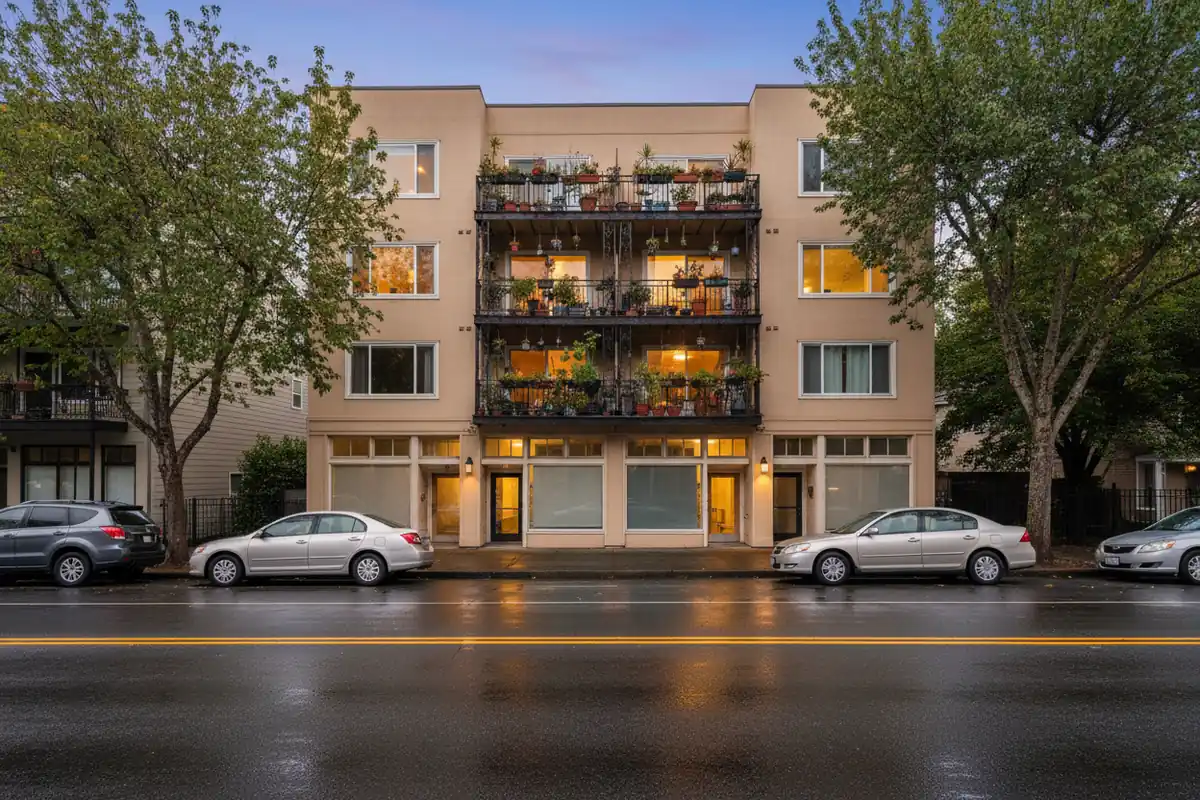
Apartments with planted balconies above plain glass shopfronts on a quiet Oakland street.
Immediate answer

Selling a California mixed-use building: just cause rules for residential tenants, two deposit-transfer statutes, the URM earthquake guide and hazardous-release notice.

On this page
  1. What a Mixed-Use Building Means for an Owner Selling in California
  2. Residential Tenants and Just Cause Protection Under Civil Code Section 1946.2
  3. What Happens to Residential Security Deposits When the Building Sells
  4. Commercial Security Deposits at the Point of Sale
  5. Unreinforced Masonry Buildings: The Disclosure a Seller Must Make
  6. Known Hazardous Substance Releases: Notice Before a Nonresidential Sale
  7. Options and Trade-offs When Selling a Mixed-Use Building
  8. Common Mistakes
  9. What to Do Next
  10. Frequently asked questions
  11. Sources

A California mixed-use building can be sold with its tenants in place. The sale carries duties from two sets of rules. Residential tenants keep their just cause protection and their deposits. Commercial deposits follow their own statute. An older unreinforced masonry building or a known hazardous release adds a seller disclosure.

An owner preparing to sell a building with shops or offices downstairs and apartments above is holding two kinds of property under one roof. Each comes with its own leases, deposits and paperwork, and the buyer will read every one of them. The questions are practical ones. Can the apartments be emptied before closing? What happens to the money tenants paid up front? What must be handed to the buyer in writing? The answers come from five California statutes, explained below in the order a sale meets them.

What a Mixed-Use Building Means for an Owner Selling in California

A mixed-use building is a single building or parcel that combines at least one residential unit with at least one commercial space, such as a store, an office or a similar business use. For a seller, that combination matters more than the label. The apartments bring California's residential tenant-protection law into the sale. The commercial spaces bring their own leases and a separate deposit statute.

A buyer of this kind of building is buying an income stream from two kinds of tenancies. That buyer will look at who occupies each unit and on what terms, what the seller holds in deposits, and what the seller knows about the building's construction and its ground.

This page covers five areas of California law that shape the sale:

  • just cause protection for residential tenants;
  • the transfer of residential security deposits;
  • the transfer of commercial security deposits;
  • the disclosure for an unreinforced masonry building;
  • the notice of a known hazardous substance release.

How each one applies depends on the facts of the building: when it was built, how it was built, who lives and works there, what the leases say, and what the owner knows. It also depends on the law that applies to that building, including any local rules. City and county rules, and other state disclosure requirements not covered on this page, can add to the five areas described here. A seller may meet other state disclosure forms during the sale, and an attorney can identify which ones reach a particular building.

Residential Tenants and Just Cause Protection Under Civil Code Section 1946.2

Civil Code section 1946.2 sets the rule. Its text reads: "after a tenant has continuously and lawfully occupied a residential real property for 12 months, the owner of the residential real property shall not terminate a tenancy without just cause, which shall be stated in the written notice to terminate tenancy." Where additional adult tenants join the lease before an existing tenant reaches 24 months, the rule applies only if all tenants have occupied for 12 months or more, or one or more tenants have occupied for 24 months or more.

"Just cause" comes in two kinds. At-fault just cause includes, among other listed grounds, default in rent, breach of a material lease term, nuisance, and criminal activity. No-fault just cause includes owner or close-relative move-in, withdrawal from the rental market, compliance with certain government or court orders, and intent to demolish or substantially remodel. A pending sale is not among the grounds the statute lists.

A no-fault termination carries added duties. The owner must either make a relocation payment or waive the final month's rent in writing. The amount equals one month of the tenant's rent in effect when the notice issued. Any relocation payment is due no later than 15 calendar days after service of the notice. The statute says an owner's failure to strictly comply with this subdivision "shall render the notice of termination void."

Not every unit falls under the rule. The statute names several kinds of property it leaves out, including transient hotel occupancy, certain shared-facility arrangements with a resident owner, and housing issued a certificate of occupancy within the previous 15 years. That last exemption applies unless the housing is a mobilehome. The list continues beyond these examples, so a seller with newer apartments upstairs may find that some or all of them sit outside the rule.

The California Attorney General's Landlord-Tenant Issues page describes the Tenant Protection Act as creating "statewide eviction protections for most residential tenants after they have lived in their unit for 12 months."

Local rent control and eviction rules

The statewide rule is not always the only one. The Attorney General's page notes that local rent control laws may further restrict rent increases, and it describes landlords as needing to comply with "all state and local requirements" for certain evictions. In plain terms, the statewide rule and a local ordinance can apply to the same apartment at the same time. A building in a city or county with its own rent or eviction ordinance may carry those local rules into the sale as well, and a buyer reviewing the rent roll will usually look at both layers.

In practice, the apartments generally go to the buyer still occupied. A qualifying tenancy cannot be ended just because the building is under contract. The just cause rule reaches only the residential units; the commercial spaces are governed by their own lease terms.


What Happens to Residential Security Deposits When the Building Sells

The money a residential tenant paid at move-in is not the landlord's to keep. Civil Code section 1950.5 says "any security shall be held by the landlord for the tenant who is party to the lease or agreement." It also says the tenant's claim to the security "shall be prior to the claim of any creditor of the landlord."

The same section caps the size of a deposit. The Attorney General's page summarizes it this way: "For most residential rental properties, landlords may only charge a security deposit of up to one month's rent." The statute contains exceptions to that general limit. A buyer reviewing the deposit ledger may compare each deposit against it.

The section speaks to a sale directly. It refers to "the termination of a landlord's interest in the premises and the transfer of the security to the landlord's successor in interest." It then places return duties on that successor. When the successor received rent from the tenant electronically, the successor returns the remainder of the security electronically to an account the tenant designated in writing. It may also use any electronic or virtual method available to it if the tenant agrees in writing.

Once a tenant moves out, the section sets the accounting. No later than 21 calendar days after the tenant has vacated, the landlord furnishes an itemized statement and returns any remaining portion of the security. Deductions are limited to the purposes the statute lists, which exclude ordinary wear and tear.

The deposits, in short, do not disappear at closing. Each one is accounted for and passed on to the buyer in the way the statute provides. An attorney can review how the full transfer provisions of the section apply to a given closing.

Commercial Security Deposits at the Point of Sale

The shops and offices follow a parallel rule in a different statute. Civil Code section 1950.7 governs deposits that secure "a rental agreement for other than residential property." For residential property, the text says, "the provisions of Section 1950.5 shall prevail."

At a sale, the text reads: "Upon termination of the landlord's interest in the unit in question, whether by sale, assignment, death, appointment of receiver or otherwise, the landlord or the landlord's agent shall, within a reasonable time, do one of the following acts." The owner may choose either act, and either one relieves the landlord of further liability for the deposit:

  1. Transfer the remaining deposit, after lawful deductions, to the successor in interest, and then notify the tenant by personal delivery or certified mail. The notice covers the transfer, any claims made against the deposit, and the transferee's name and address.
  2. Return the remaining deposit, after lawful deductions, to the tenant.

A transferee who receives a deposit takes on "all of the rights and obligations of a landlord holding the payment or deposit." Bad-faith retention of a deposit may subject the landlord or transferee to damages not to exceed $200, in addition to any actual damages.

One building can therefore carry both deposit duties at once: section 1950.5 for the apartments and section 1950.7 for the commercial spaces, each addressed at or before closing.

How the purchase agreement fits in

The statutes set what has to happen to the deposits. The purchase agreement between seller and buyer is where the two sides usually write down how they will carry it out: which deposits pass to the buyer, which are returned to tenants, and how each is reflected in the closing figures. Because the statutory duties run to the tenants, the agreement works alongside them rather than in place of them. An attorney can review how a particular agreement handles the deposits for each kind of tenant.

Unreinforced Masonry Buildings: The Disclosure a Seller Must Make

Construction type and age decide this duty. Government Code section 8875.6 applies to "any unreinforced masonry building with wood frame floors or roofs, built before January 1, 1975, which is located within any county or city." An unreinforced masonry building has brick or similar masonry walls without steel reinforcing.

The transferor, or the transferor's agent, "shall, as soon as practicable before the sale, transfer, or exchange, deliver to the purchaser a copy of the Commercial Property Owner's Guide to Earthquake Safety." This duty has applied on and after January 1, 1993. The section does not apply to certain transfers that another section of the Government Code describes.

The duty does not wait for the buyer to ask. If the building meets the description, the guide is delivered before the transfer. The rule looks at the building as a whole, so a mixed-use building that fits the description is covered even though people live upstairs.

Known Hazardous Substance Releases: Notice Before a Nonresidential Sale

Knowledge triggers this duty, not a test result alone. Health and Safety Code section 78700 provides that an owner of nonresidential real property who "knows, or has reasonable cause to believe, that any release of hazardous substance has come to be located on or beneath that real property shall, prior to the sale, lease, or rental of the real property by that owner, give written notice of that condition to the buyer, lessee, or renter."

An owner who fails to give required notice faces actual damages and any other remedies the law provides. Where an owner has actual knowledge of a release of a material amount and knowingly and willfully fails to give notice, that owner is liable for a civil penalty not to exceed $5,000 for each separate violation.

The notice is a written statutory duty tied to the nonresidential real property, and it applies once the owner knows or has reasonable cause to believe a release exists. An attorney can say how it applies to a building that combines commercial and residential uses.

One public record bears on this question. The Department of Toxic Substances Control's page, DTSC's Hazardous Waste and Substances Site List - Site Cleanup (Cortese List), describes the Cortese List as "a planning document used by the State, local agencies, and developers" to provide information about the location of hazardous materials release sites. The page says DTSC supplies a portion of the list through its EnviroStor database. Other state and local agencies provide additional release information.

Options and Trade-offs When Selling a Mixed-Use Building

The sale path changes the process. It does not change the duties above. The tenancy, deposit, masonry and hazardous-release rules apply the same way whoever the buyer is and however the deal is made.

Listing with a commercial real estate agent. An agent markets the building to the open market, handles showings and negotiates terms. The seller gains a wider pool of buyers and someone to manage the process. In exchange, the seller pays a commission, prepares the building and its records for scrutiny, and accepts that many buyers depend on a loan.

Selling without an agent. An owner may find a buyer and negotiate alone. The seller avoids a listing commission but takes on the marketing, the paperwork and the negotiation, along with every required disclosure and deposit transfer.

Selling directly to a buyer who pays cash and takes the building as it is. A direct offer is often lower than an open-market sale price. That buyer takes on the repairs, the tenancy risk and the cost of reselling. The seller gets less preparation, fewer showings and less dependence on a buyer's loan.

Carrying back financing. The seller can act as lender for part of the price, so the buyer pays over time. A carryback can widen the pool of buyers. It also leaves the seller exposed to the buyer's payments, and the terms belong with an attorney.

Owners typically compare paths by setting written offers side by side and estimating net proceeds for each. Net proceeds are the price less commissions, repairs, carrying costs, loan payoffs and closing costs.

Common Mistakes

The sections above point to a handful of recurring errors:

  • serving notices to empty the apartments because of the sale;
  • treating deposits as part of the sale proceeds;
  • transferring commercial deposits without the tenant notice;
  • assuming a buyer's inspection replaces the seller's disclosures.

Each is easier to avoid when the records are in order before a buyer is found.

What to Do Next

The obligations of a mixed-use sale usually come into focus once the building's lease files, deposit ledgers, construction records and any prior environmental reports sit together in one place. The DTSC Cortese List page linked above, and the EnviroStor profile it opens for a listed site, are public records an owner can check against the property.

How it works

A structured process, not a sales pitch

Describe your commercial property — asset type, size, occupancy, location and timeline — to clarify your selling path.

The seller intake

  1. Describe the asset

    Type, size, occupancy, location and timeline — six short steps.

  2. Clarify the path

    Listed, off-market, direct cash or sale-leaseback, based on fit.

  3. Connect by consent

    Information is shared only if you expressly agree.

Start Seller Intake

Seller intake

Six questions to clarify your selling path.

Asset, size, occupancy, location and timeline. Nothing is shared without your express consent.

Begin intake

Contact

Discuss your property

Contact details and consent

See the Privacy Policy and Terms.

Testimonials

Selling the warehouse without months of marketing was appealing to our ownership group.

J.R., Miami, FL

Frequently asked questions

What is a mixed-use building?

It is a single building or parcel with at least one residential unit and at least one commercial space, such as a store or an office. The label matters less than the split it creates: the apartments and the commercial spaces are reviewed separately, which is why a buyer's review of a mixed-use building runs on two tracks.

Do California's tenant protection laws apply to the residential units in a mixed-use building?

Generally yes, unless one of the statute's exemptions applies. Newer apartments are the case owners most often overlook: a certificate of occupancy issued within the previous 15 years can take housing outside the rule. A local ordinance may still apply even where the statewide rule does not. The commercial spaces follow their leases instead.

What happens to security deposits when a mixed-use building is sold?

The residential deposits and the commercial deposits are handled under two separate statutes, as described above, and the purchase agreement typically records how the two sides carry those duties out. The transfer is easier when each deposit's amount, its date and any claims against it are already recorded, tenant by tenant.

Does a seller have to disclose if a building is unreinforced masonry?

Yes, if the building fits the statute's description, and certain transfers are excepted. In a mixed-use building, the residential units upstairs do not take the building out of the rule, because the rule looks at the building as a whole.

What is the Cortese List and why does it matter when selling a commercial building?

DTSC's page describes the Cortese List as a planning document identifying hazardous materials release sites, compiled from several agencies' information. It is not the seller's notice, but a listing may bear on what an owner knows or has reason to believe.

Can a mixed-use building be sold directly to a buyer without listing it with an agent?

Yes. A direct sale is one of the available paths, though a direct offer is often lower than an open-market price because the buyer absorbs the risk and the work. The tenancy rules, deposit transfers and disclosures stay exactly the same either way.

Does selling a mixed-use building require the seller to end the residential tenancies first?

No statute supplied here requires it, and a pending sale is not a listed just cause. Occupied units generally pass to the buyer with their tenancies intact. The buyer then steps into the same just cause rules that bound the seller.

Sources

Statutes, regulations and court sources

  1. 01California Civil Code section 1946.2 · California Legislative Information
  2. 02California Civil Code section 1950.5 · California Legislative Information
  3. 03California Civil Code section 1950.7 · California Legislative Information
  4. 04California Government Code section 8875.6 · California Legislative Information
  5. 05California Health and Safety Code section 78700 · California Legislative Information

Other sources

  1. 06California Department of Justice, Office of the Attorney General: Landlord-Tenant Issues · oag.ca.gov
  2. 07California Department of Toxic Substances Control: DTSC's Hazardous Waste and Substances Site List - Site Cleanup (Cortese List) · dtsc.ca.gov