Skip to content
Corrugated metal factory hall with a sawtooth roof and an empty concrete apron

Industrial & Manufacturing

Sell Industrial or Manufacturing Property

Updated November 21, 2026

Start seller intake
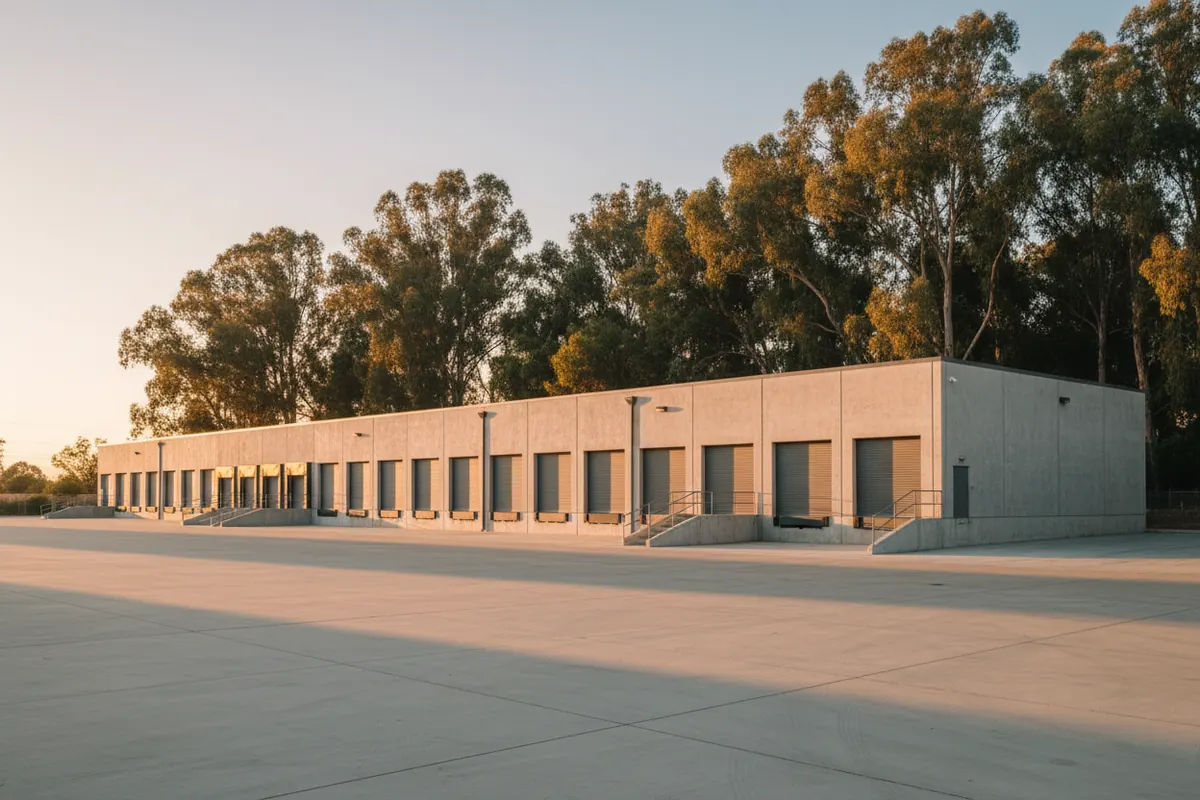
A tilt-up industrial building with loading docks along an empty paved apron at golden hour.
Immediate answer

Selling a California industrial building: the hazardous substance notice, the earthquake fault zone disclosure and the unreinforced masonry guide rule.

On this page
  1. What It Means for Owners of Industrial and Manufacturing Buildings
  2. Who the Disclosure Duties Affect
  3. Rules, Disclosures, and Fine Print
  4. Options and Trade-offs When Selling an Industrial Property
  5. Mistakes to Avoid When Selling an Industrial or Manufacturing Building
  6. What to Do Next
  7. Frequently asked questions
  8. Sources

Selling a California industrial or manufacturing building generally brings three seller duties. The first is written notice to the buyer of a known hazardous substance release. The second is disclosure that the property lies in an earthquake fault zone. The third is delivery of an earthquake safety guide for certain older masonry buildings.

You own a warehouse, a flex building or a plant, and you are getting it ready for sale. Years of operations, old permits, a tank that may or may not still be in the ground and a building that predates modern codes can raise questions you have not had to answer before. This guide explains which California rules apply to that kind of sale, what each one asks of the seller, and how those rules sit alongside the choices about how to sell.

What It Means for Owners of Industrial and Manufacturing Buildings

Industrial and manufacturing property is a branch of commercial real estate. A buyer sizes it up differently from an office or a retail building. The questions are about how much electrical power the site can carry, how much clear height sits under the roof structure, how trucks load and turn, and whether zoning allows the use the buyer has in mind. Those features drive what a building is worth to a particular buyer. They also explain why the pool of buyers for a given plant can be narrow.

The past use of the site is the other half of the picture. Manufacturing, storage and fleet work can leave substances in the soil or groundwater. A buyer's lender and the buyer's own advisers will want to know about them. That history, along with the site's seismic location and the way the building was put together, is what ties an industrial sale to the three statutes covered below:

  • Health and Safety Code section 78700, on a known hazardous substance release
  • Public Resources Code section 2621.9, on earthquake fault zones
  • Government Code section 8875.6, on older unreinforced masonry buildings

In practical terms, a buyer's due diligence on an industrial site is more intensive than on an office or retail building. A seller's preparation tends to reflect that, starting with what is already in the owner's files.

Who the Disclosure Duties Affect

Each statute reaches a different seller, and an owner may fall under one, two or all three.

Hazardous substance notice. The notice applies to an owner of nonresidential real property who knows, or has reasonable cause to believe, that a release of a hazardous substance has come to be located on or beneath the property. For an industrial owner, the trigger is what the owner knows or has reason to believe. A spill that no one ever recorded in a report can still count.

Fault zone disclosure. The disclosure concerns real property located within a delineated earthquake fault zone. The transferor is the seller or other person transferring the property. The duty falls on the transferor's agent, or on the transferor if acting without an agent, and the disclosure goes to any prospective transferee. A seller who sells without an agent carries this disclosure personally.

Masonry guide. The rule applies to the transferor, or the transferor's agent, of an unreinforced masonry building with wood frame floors or roofs that was built before January 1, 1975, in any county or city. The rule turns on the age of the building and how it was built. A building that matches the description is covered whatever business runs inside it.

None of these duties changes with the kind of buyer. An investor, an owner-occupant and a buyer paying cash receive the same notices. The statutes attach the duty to the owner, the transferor or the agent, not to the buyer's financing.

Rules, Disclosures, and Fine Print

The hazardous substance notice

The hazardous substance notice has the sharpest edges. Under Health and Safety Code section 78700, the owner "shall, prior to the sale, lease, or rental of the real property by that owner, give written notice of that condition to the buyer, lessee, or renter." An owner who fails to give a required notice is subject to actual damages and any other remedies provided by law. Where the owner has actual knowledge of a release of a material amount of a hazardous substance and knowingly and willfully fails to give notice, the owner is liable for a civil penalty not to exceed $5,000 for each separate violation. The notice has to be in writing and come before the sale, so it belongs in the seller's paperwork from the start.

The Department of Toxic Substances Control's page, DTSC's Hazardous Waste and Substances Site List - Site Cleanup (Cortese List), says the Cortese List is a planning document used by the State, local agencies and developers to provide information about the location of hazardous materials release sites. DTSC supplies one portion of that list, and other agencies supply more.

The fault zone disclosure

Under Public Resources Code section 2621.9, the disclosure is required only in either of two situations. One is when the transferor or the agent has actual knowledge that the property is in the zone. The other is when a map that includes the property has been provided to the city or county and a notice has been posted at the offices of the county recorder, county assessor and county planning agency. In transactions covered by the Civil Code's natural hazard rules, the disclosure is given on either the Local Option Real Estate Transfer Disclosure Statement or the Natural Hazard Disclosure Statement. In other words, the fault zone fact usually travels on one of those two forms rather than in a separate letter. The statute adds that it does not limit any other disclosure obligation in law or any obligation needed to avoid fraud, misrepresentation or deceit. In practice, a posted map can create the duty even if the seller never looked at it.

The California Geological Survey's page, Alquist-Priolo Earthquake Fault Zones, says the State Geologist establishes the zones and issues the maps. It says the EQ Zapp interactive map shows fault zones in relation to any parcel in California.

The masonry guide

Under Government Code section 8875.6, the transferor or agent of a covered masonry building shall, "as soon as practicable before the sale, transfer, or exchange, deliver to the purchaser a copy of the Commercial Property Owner's Guide to Earthquake Safety." The section does not apply to certain transfers that another section of law describes. For the owner, this means a copy of a specific state guide changes hands, separate from any statement about the building. The duty is delivery of the guide itself; the statute does not call for the seller to write a description of the building's seismic condition.

The buyer's Phase I

A Phase I Environmental Site Assessment is a records review and site inspection that is usually the first step in a buyer's environmental review. The EPA's page, Brownfields All Appropriate Inquiries, says the ASTM E1527-21 standard is consistent with the federal All Appropriate Inquiries rule. That rule is the process for evaluating a property's environmental conditions. The page says a report may cover site reconnaissance, interviews with owners and occupants, and findings on storage tanks, drains, sumps, wells, and soil and groundwater contamination, along with an environmental professional's opinion. The page also says that under federal law a person may be held strictly liable for cleanup based solely on ownership. That is one reason buyers take the Phase I seriously.

Whether a given duty applies depends on the property's facts and the law that applies to them. A real estate attorney reviews the specific obligations for a particular sale.


Options and Trade-offs When Selling an Industrial Property

Three broad paths exist, and the disclosure rules above travel with every one of them.

Listing on the open market through a real estate agent. A listing exposes the building to a wider pool of users and investors. That can matter for a property whose power, clear height or zoning suits only certain operations. Buyers in that pool commonly finance, order a Phase I and negotiate around what it finds.

Selling directly to a buyer without a listing. Such a buyer, often one paying cash, may close with less preparation, fewer showings and less dependence on a buyer's loan. The trade is price. A direct offer is often lower than an open-market price because the buyer takes on repairs, environmental risk and the cost of reselling or repositioning the site.

Selling as-is. As-is describes the condition the buyer accepts. It does not remove any of the seller's disclosure duties.

Environmental contingencies are common on every path. A Phase I finding, or a recommendation for further investigation, can reopen price and terms. Comparing written offers and estimated net proceeds is how an owner tells which path fits. Net proceeds are the price less commissions, repairs, carrying costs, loan payoffs and closing costs.

Some sellers of investment property look at a 1031 exchange. Under that federal structure, a seller defers recognizing gain by reinvesting in like-kind property, subject to its rules and deadlines. It can constrain the timing and the choice of the replacement property. A CPA, an enrolled agent or a tax attorney reviews whether it fits a particular sale.

Mistakes to Avoid When Selling an Industrial or Manufacturing Building

Most missteps in industrial sales come down to timing: a fact the seller could have found early surfaces late, in the buyer's hands.

Going to market before searching the Cortese List and the owner's files. A release the buyer finds first leaves the seller explaining a missing notice. Drafting the notice before a buyer asks keeps the seller in front of the question.

Leaving the fault zone question to the escrow stage. Because a posted map alone can create the duty, a missed disclosure can become a dispute after the sale. A parcel lookup on the state map settles it at the outset.

Not pulling building records on an older brick or block structure. The construction date and type in the building department's file decide whether the guide is owed.

Treating a cash or as-is buyer as the end of the paperwork. The notices belong in every contract package, whoever the buyer is.

Skipping a records review of the site's history. Prior uses, operating permits, underground storage tank records and earlier environmental reports shape what the seller knows and what a buyer's Phase I will turn up. Gathering them first puts the seller ahead of the buyer's questions rather than behind them.

What to Do Next

The documents an industrial seller typically gathers include prior environmental reports, operating and building permits, underground storage tank records, and a history of who used the site and for what. The official records worth checking are the Cortese List, the Alquist-Priolo maps, and the county assessor's and building department's files on the parcel.

Each professional reviews a different question. A real estate attorney reviews disclosure duties and contract terms. A CPA or an enrolled agent reviews tax questions, including whether a 1031 exchange fits. An environmental consultant reviews Phase I questions. An appraiser reviews value. Through its form, a reader can request a commercial property sale options consultation from Silver Lining Commercial Properties.

A practical starting point is the file drawer: the oldest environmental report or tank record on the site, and the year the building was built. Those two facts answer much of what the three statutes ask.

How it works

A structured process, not a sales pitch

Describe your commercial property — asset type, size, occupancy, location and timeline — to clarify your selling path.

The seller intake

  1. Describe the asset

    Type, size, occupancy, location and timeline — six short steps.

  2. Clarify the path

    Listed, off-market, direct cash or sale-leaseback, based on fit.

  3. Connect by consent

    Information is shared only if you expressly agree.

Start Seller Intake

Seller intake

Six questions to clarify your selling path.

Asset, size, occupancy, location and timeline. Nothing is shared without your express consent.

Begin intake

Contact

Discuss your property

Contact details and consent

See the Privacy Policy and Terms.

Testimonials

Selling the warehouse without months of marketing was appealing to our ownership group.

J.R., Miami, FL

Frequently asked questions

Is industrial property the same as commercial property?

Industrial property is one category within commercial real estate. It is set apart by zoning that permits production, storage or distribution, and by physical features such as power supply, clear height and truck loading. Those features narrow the buyers for whom a specific building works.

What are the disclosure requirements when selling a California industrial property?

Three rules commonly apply: written notice of a known hazardous substance release, disclosure of an earthquake fault zone location, and delivery of an earthquake safety guide for certain pre-1975 masonry buildings. Each has its own trigger, covered above. A real estate attorney reviews which ones reach a specific property.

What is a Phase I Environmental Site Assessment and do I need one to sell?

A Phase I is a records review, site visit and set of interviews that follows the EPA's All Appropriate Inquiries process. It identifies recognized environmental conditions. Buyers of industrial sites commonly order one, and the EPA ties it to a purchaser's federal liability protections. Its findings often shape negotiation.

Who can value my commercial property?

An appraiser prepares a formal appraisal. It analyzes the building, its income and comparable properties to reach an opinion of value. A real estate agent's opinion of a likely price is a different thing from an appraisal. For an industrial site, environmental findings can also figure in value.

How can a seller defer capital gains on the sale of commercial property?

A 1031 exchange under federal law lets a seller of investment property defer recognizing gain by reinvesting in like-kind property, subject to rules and deadlines. Whether it fits, and what it means for a particular owner, is a question a CPA, an enrolled agent or a tax attorney reviews.

Does selling to a cash buyer change my disclosure obligations?

No. The hazardous substance notice, the fault zone disclosure and the masonry guide rule attach to the owner, the transferor or the agent. How the buyer pays does not change what the seller owes.

What is the Cortese List and how does it affect my sale?

DTSC's page describes the Cortese List as a planning document that identifies hazardous materials release sites. A listing is a public signal a buyer will likely find. Apart from the list, an owner who knows of a release owes written notice before the sale under Health and Safety Code section 78700.

What does the Alquist-Priolo Earthquake Fault Zone disclosure require?

The seller's agent, or a seller acting alone, tells any prospective buyer that the property lies in a delineated earthquake fault zone. The duty arises when the seller has actual knowledge or when a qualifying map has been provided to the city or county and the county offices have posted notice. The California Geological Survey issues the maps.