Skip to content
Long distribution warehouse with a row of loading dock doors under an overcast sky

Direct Sale

Sell Commercial Property for Cash

Updated November 21, 2026

Start seller intake
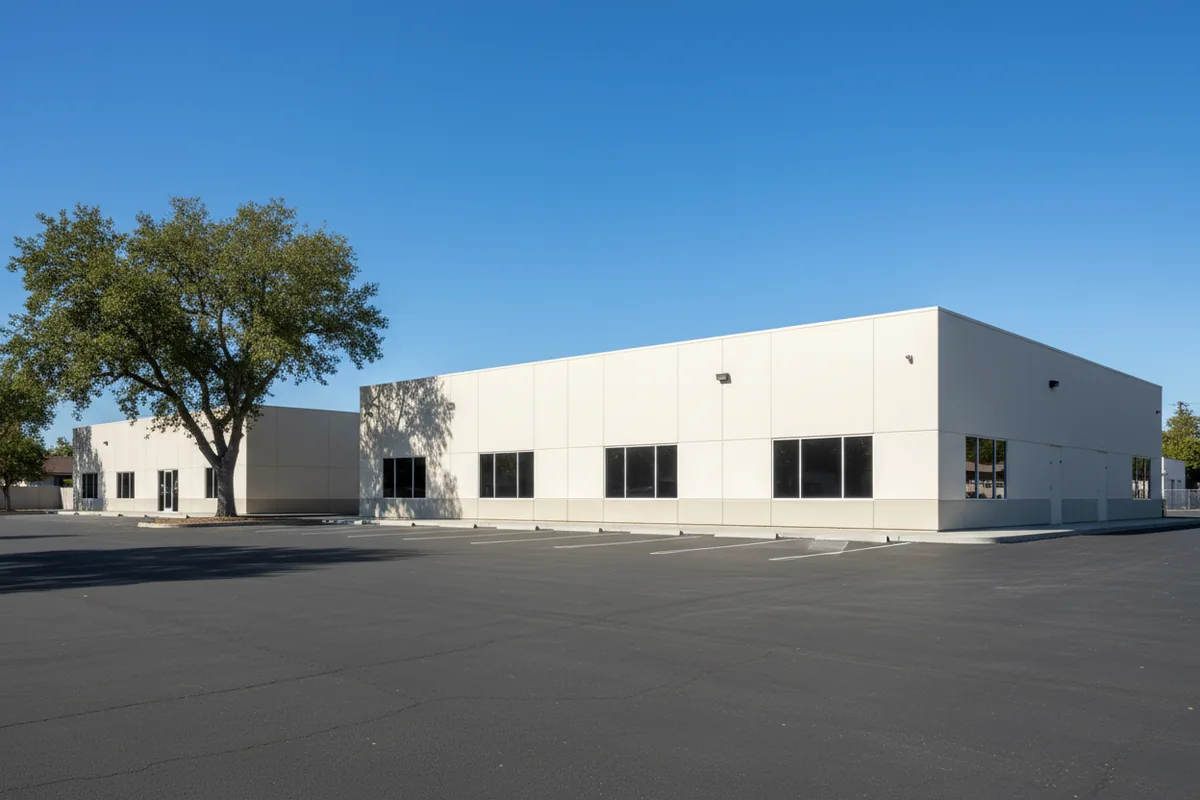
A freshly painted commercial building on a clear day, ready for a quick sale.
Immediate answer

A cash sale of California commercial property still runs on the same rules: broker licensing, escrow, county transfer tax, IRS and FTB withholding, hazard notice.

On this page
  1. What It Means for Owners
  2. Who It Affects: Owners Thinking About a Cash Buyer
  3. Rules, Disclosures and Fine Print in a Cash Sale
  4. Options and Trade-offs: Is a Cash Sale the Right Fit for Your Building?
  5. Common Missteps in a Cash Sale
  6. What to Do Next
  7. If You Are Thinking About a Cash Sale for Your Building
  8. Frequently asked questions
  9. Sources

A California owner can sell a commercial building to a buyer who pays cash. That means the buyer pays without a lender's loan, so the deal does not hinge on financing. The rest of the sale stays the same: escrow, the county's transfer tax, tax withholding at closing and the seller's hazardous substance notice all still apply.

You may own an office building, a retail center, a warehouse, an industrial site, a mixed-use building or a building your own business occupies. A cash offer can sound simpler than a listing, and it makes sense to want a clear picture of the sale before signing anything. This guide walks through what a cash sale involves under California law: who has to hold a real estate license, how escrow works, the documentary transfer tax, federal and state withholding, and the notice an owner gives about a known hazardous substance release. It ends with how a cash sale compares with a listed sale.

What It Means for Owners

In a commercial cash sale, the buyer brings its own funds to closing instead of a loan. Without a lender, the deal has no bank appraisal requirement and no loan approval that can fall through. For the seller, the main change is that one risk to the deal goes away: the risk that the buyer's financing fails.

Everything else about the sale still applies. The deed is recorded. The county can still tax the transfer. The buyer or the escrow holder may still have to withhold tax from the proceeds. The seller still owes the notices California law requires. A buyer who pays cash takes on none of the seller's legal duties by doing so.

Commercial buyers also differ from home buyers. They are typically investors, businesses buying space to use themselves, or entities such as partnerships and corporations. A buyer like that tends to review the leases, the tenants and the building's income closely, because those are what it is paying for.

Who It Affects: Owners Thinking About a Cash Buyer

This page is written for the owner of record of a California commercial building, meaning the person or entity named on the deed. That owner is the seller who signs. If title is held by a partnership, a corporation, a trust or several co-owners, the right to sign depends on how title is held and on the entity's own documents. A title report and those documents show who that is.

The rules below apply to each kind of building this page covers: office, retail, warehouse, industrial, mixed-use and owner-occupied commercial. They apply both when an owner sells to a party who approaches directly and when an owner sells through a broker.

How each rule applies to a particular sale depends on the facts and on the law that governs them. The relevant facts include who the seller is, where the property sits, what the contract says and what the owner knows about the site's condition.

Rules, Disclosures and Fine Print in a Cash Sale

Who must hold a real estate license

Bus. & Prof. Code section 10131 defines a real estate broker. The section says a broker is "a person who, for a compensation or in expectation of a compensation, regardless of the form or time of payment, does or negotiates to do" certain acts "for another or others." Those acts include selling or offering to sell, buying or offering to buy, soliciting prospective sellers or buyers, soliciting or obtaining listings, and negotiating the purchase, sale or exchange of real property. Leasing, loan brokering and other acts are on the list as well.

The definition turns on two things: compensation, and acting for someone else. An owner selling its own building is acting for itself. A third party who, for pay, solicits sellers or negotiates a sale on behalf of a buyer falls within the definition.

In practice, when someone says they represent a buyer or can find buyers, asking whether they hold a California real estate license is a simple way to learn which side of that line they are on.

Escrow, and what happens when a sale does not close

Escrow is an arrangement in which a neutral holder keeps the buyer's deposit and the documents until the conditions of the sale are met. The California Department of Financial Protection and Innovation's Escrow Agents page says the Escrow Law is contained in Division 6 of the California Financial Code. The same page says that law "protects members of the public who entrust their money or other assets to independent escrow agents in California."

Civil Code section 1057.3 makes it the obligation of a buyer and seller to ensure that escrow funds are returned to the person who deposited them, or who is otherwise entitled to them under the contract, when the purchase is not completed by the contract's close-of-escrow date or a duly executed extension. The section allows funds to be withheld to resolve a good faith dispute.

The section's limit matters here. It defines "property" as real property containing one to four residential units, at least one of which the buyer will occupy. Its terms, as written, therefore reach that kind of property and not a commercial building.

In practice, in a commercial cash sale the purchase contract and escrow instructions decide who receives a deposit if the deal falls apart. A buyer's deposit does not go to the seller automatically.

Documentary transfer tax on the deed

Rev. & Tax. Code section 11911 lets a county board of supervisors adopt an ordinance taxing each deed by which realty sold within the county is conveyed. The tax applies when the consideration or value conveyed exceeds one hundred dollars ($100), measured exclusive of any lien or encumbrance remaining on the property at the time of sale. The section sets the county rate at fifty-five cents ($0.55) for each five hundred dollars ($500) or fractional part.

A city inside such a county may impose its own tax at one-half that rate. The county must allow a credit for a conforming city tax.

How the buyer pays does not enter into the tax. In practice, the transfer tax shows up as a closing cost. Which party pays it is set by the contract, and the amount depends on the price and on the county's and city's ordinances. The county recorder's office can confirm the rate that currently applies.

Federal and state withholding from the proceeds

The IRS page FIRPTA withholding covers sales by foreign persons. It says buyers of U.S. real property interests from foreign persons, certain purchasers' agents and settlement officers "are required to withhold 15% (10% for dispositions before Feb. 17, 2016) of the amount realized," with special rules for foreign corporations. The page says the buyer is the withholding agent "in most cases." It also says that when a U.S. business entity, such as a corporation or partnership, disposes of a U.S. real property interest, the entity itself is the withholding agent.

The same IRS page also describes a withholding certificate. Where the statutory withholding could exceed the seller's maximum tax liability on the sale, the page explains that a withholding certificate can be requested from the IRS, which would allow the buyer, through the escrow or closing agent, to withhold at an approved reduced rate. The application form the page names is Form 8288-B, Application for Withholding Certificate for Dispositions by Foreign Persons of U.S. Real Property Interests. The page says the IRS will normally act on an application no more than 90 days after receiving all the information it needs.

The Franchise Tax Board's Real estate withholding page describes California withholding as "a prepayment of income tax due from the selling of California land or anything on it." It says one Form 593 is filed with the FTB after every real estate transaction, and that withholding applies to like-kind exchanges as well.

The FTB lists exemptions, including property of $100,000 or less, property in foreclosure, and a seller that is a bank acting as trustee. It points to Form 593, Part III, for the complete list of full exemptions and Part IV for full or partial ones. The page says an exemption is filed by submitting Form 593 to the escrow agent before closing.

In practice, if withholding applies, it comes out of the seller's proceeds at closing whether or not a lender is involved. A CPA, an enrolled agent or a tax attorney can review whether an exemption or a withholding certificate fits a particular sale.

Notice of a known hazardous substance release

Health and Safety Code section 78700 applies to owners of nonresidential real property. An owner who knows, or has reasonable cause to believe, that a release of hazardous substance "has come to be located on or beneath that real property" must give the buyer, lessee or renter written notice of that condition. The notice is due before the sale, lease or rental.

If the owner fails to give the notice, the owner is subject to actual damages and any other remedies provided by law. An owner who has actual knowledge of a release of a material amount and knowingly and willfully fails to give notice is liable for a civil penalty not to exceed five thousand dollars ($5,000) for each separate violation.

"As-is" describes the condition the buyer agrees to accept. It does not displace this notice, whatever the buyer pays with.


Options and Trade-offs: Is a Cash Sale the Right Fit for Your Building?

A listed sale. The owner engages a real estate broker, who markets the building to many buyers. The price comes out of competition among them. In exchange, the owner prepares the property, hosts tours and answers due diligence requests from several parties, and some of those buyers may depend on a loan.

A direct cash sale. A single buyer offers to buy without a financing contingency, and the building is not marketed publicly. A direct offer like this often comes in lower than what open-market bidding might produce. The buyer is taking on the deferred repairs, the risk in the leases or the site, and the cost of reselling or repositioning the building, and it prices those in. What the seller gets for that discount is less preparation, fewer tours and no dependence on a lender's approval.

Other routes. An owner can also:

  • Sell as-is through a broker. The building goes to market in its present condition.
  • Sell without a broker. The owner markets the building and negotiates directly.
  • Sell and lease back. An owner-occupant sells the building and stays on as a tenant under a new lease.
  • Structure a like-kind exchange. Whether an exchange fits a given sale is a question for a CPA, an enrolled agent or a tax attorney.

One way to compare these routes is to set written offers side by side and estimate the net proceeds of each. Net proceeds are the price less commissions, repairs, carrying costs, loan payoffs and closing costs. This puts the routes on actual numbers, though the comparison does not pick one.

Common Missteps in a Cash Sale

Most missteps in a cash sale come from treating the absence of a lender as the absence of process.

  • Assuming cash shortens the rules. A cash price removes the financing contingency, not the deed, the transfer tax, withholding or the hazardous substance notice.
  • Not asking about an intermediary's role. Someone paid to negotiate on a buyer's behalf is acting for another, which is the situation the broker definition addresses.
  • Leaving deposit terms vague. Because the residential escrow-return rule does not reach a commercial building, unclear contract language leaves the deposit question open if the deal stalls.
  • Treating "as-is" as a disclosure waiver. The buyer's acceptance of condition and the owner's statutory notice operate separately.
  • Filing a withholding exemption late. The exemption form goes to the escrow agent before closing, so the timing sits with the seller's side, not the buyer's.

What to Do Next

A preliminary title report shows how title is held, who has to sign and which liens appear on the property. That report can be paired with the county recorder's posted transfer tax rate. Questions that often go to a tax professional are whether Form 593 or federal withholding applies to the sale, whether any exemption fits, and whether a withholding certificate is worth requesting.

If You Are Thinking About a Cash Sale for Your Building

Whether a cash offer is the right fit depends on the building, its tenants and the owner's own timeline, and talking it through often makes the trade-offs clearer. Silver Lining Commercial Properties offers a sale options consultation for owners weighing a cash sale against the other routes described above, available through the request form on this site.

How it works

A structured process, not a sales pitch

Describe your commercial property — asset type, size, occupancy, location and timeline — to clarify your selling path.

The seller intake

  1. Describe the asset

    Type, size, occupancy, location and timeline — six short steps.

  2. Clarify the path

    Listed, off-market, direct cash or sale-leaseback, based on fit.

  3. Connect by consent

    Information is shared only if you expressly agree.

Start Seller Intake

Seller intake

Six questions to clarify your selling path.

Asset, size, occupancy, location and timeline. Nothing is shared without your express consent.

Begin intake

Contact

Discuss your property

Contact details and consent

See the Privacy Policy and Terms.

Testimonials

Selling the warehouse without months of marketing was appealing to our ownership group.

J.R., Miami, FL

Frequently asked questions

Does a cash buyer still have to go through escrow?

A cash sale typically closes through escrow, because the buyer's funds and the deed still need a neutral holder. Removing the lender actually leaves escrow as the main safeguard between the parties, since no bank is checking the transaction. The DFPI's page describes the Escrow Law as protecting people who entrust money to independent escrow agents.

What is a commercial buyer?

A commercial buyer is the person or entity purchasing an office, retail, warehouse, industrial or mixed-use building. It is often an investor, a business buying space for its own use, or a partnership or corporation. When the buyer is an entity, its own authority to sign matters in the same way the seller's does.

Does selling commercial property for cash avoid the documentary transfer tax?

No. The tax is measured by the consideration or value conveyed, not by how it is funded. One related detail: the measure excludes any lien or encumbrance remaining on the property at the time of sale, so it is the structure of the conveyance, not the payment method, that can affect the figure.

Does a seller have to disclose hazardous substances to a cash buyer?

Yes. The trigger is the owner's knowledge or reasonable cause to believe, so the duty can arise even without a formal environmental report. A buyer's willingness to pay cash and close quickly does not shorten or waive the written notice owed before the sale.

Is withholding required when a foreign person sells California commercial property?

The IRS page says federal withholding generally applies when a foreign person disposes of a U.S. real property interest. Federal and California withholding are separate systems: the federal rule turns on whether the seller is a foreign person, while California's Form 593 is filed after every real estate transaction, as the FTB describes. A single sale can involve both.

Does a seller need a real estate license to sell their own commercial building?

No license is needed simply to sell one's own building, because the broker definition covers acting for another for compensation. The question becomes relevant for the people around the sale, such as a finder or a buyer's representative who expects to be paid.

What does "as-is" mean in a commercial property sale?

"As-is" means the buyer accepts the building in its present physical condition. It is a contract term, so its scope depends on how the contract words it, and an attorney can review that wording. Statutory notices, such as the hazardous substance notice, still apply alongside it.