

Skip to content
Dark glass office tower at dusk with its lit floors showing

Phase I Environmental Site Assessments

Phase I Environmental Site Assessments for Sellers

Updated November 21, 2026

Start seller intake
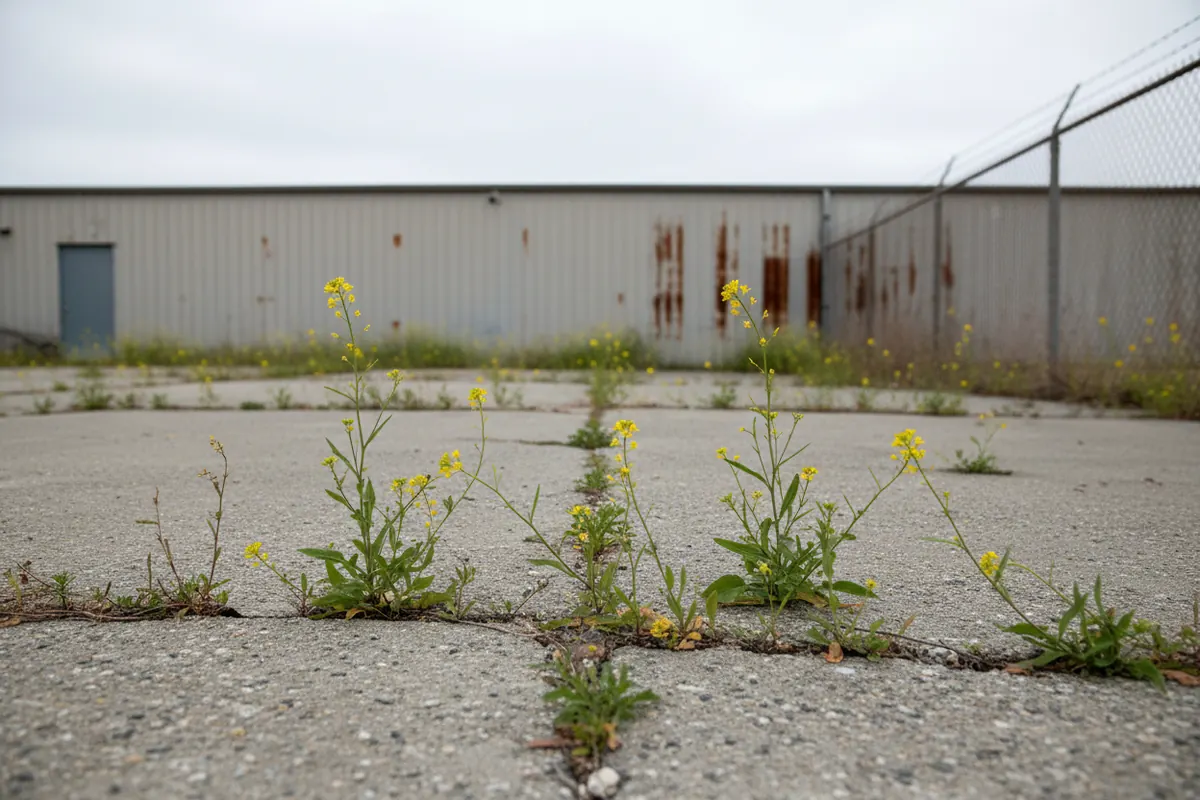
A cracked concrete pad by a corrugated building, the ground history an assessment reviews.
Immediate answer

What a Phase I ESA reviews, why buyers and lenders order one, California's Cortese List and GeoTracker, and a seller's notice duty under Health and Safety Code 78700.

On this page
  1. What a Phase I ESA Reviews
  2. How a Phase I Labels What It Finds
  3. Why Buyers and Lenders Order One Before a Commercial Sale
  4. California's Hazardous-Site Lists and What They Mean for Your Property
  5. The Seller's Notice Duty Under California Law
  6. Records a Seller Can Gather Before the Assessment
  7. Phase I and Phase II: What the Difference Means for a Sale
  8. Options When a Phase I Flags a Recognized Environmental Condition
  9. Where an Owner Can Start
  10. Frequently asked questions
  11. Sources

A Phase I environmental site assessment is a review of a property's environmental history. An environmental professional reads records, inspects the site and interviews people who know it, and does no soil or water sampling. When you sell a California commercial building, the buyer or the buyer's lender usually orders one. Your own records shape what it finds.

You own an office building, a warehouse, a retail center, an industrial site or a mixed-use property, and a sale is coming. You keep hearing the words "Phase I" and want to know what the report looks at and whether something in the building's past could slow the deal. A buyer will read the report alongside the leases, the tenants and the income. You also want to know what California law expects you to tell that buyer, whatever the report says. This guide covers what the assessment reviews, the state's hazardous-site lists, your written notice duty, and the choices you have if the report flags a concern.

What a Phase I ESA Reviews

The Phase I is built around a federal process called "all appropriate inquiries," or AAI. The U.S. Environmental Protection Agency's Brownfields All Appropriate Inquiries page describes AAI as "the process of evaluating a property's environmental conditions and assessing potential liability for any contamination." The rule is found at 40 C.F.R. Part 312. The EPA page says that ASTM International Standard E1527-21, the standard practice for a Phase I, is consistent with that rule and can be used to satisfy it.

The EPA page describes what the written report may contain, including:

  • a site description covering current and past uses of the property and of the properties next to it
  • information the buyer provides, such as title records and recorded environmental cleanup liens
  • a records review of historical sources and government databases
  • a site reconnaissance, which is a visual inspection of the property and the parcels around it
  • interviews with current and past owners and occupants
  • findings, and the environmental professional's opinion on whether there are signs of a release

The EPA page also says the report must discuss significant data gaps, meaning missing information that limits what the professional can conclude.

A Phase I does not include soil borings, groundwater sampling or laboratory analysis. That work belongs to a later step, often called a Phase II.

In practice, much of the report rests on paper and memory, and some of that paper may already be in your files.

How a Phase I Labels What It Finds

The findings section is where a seller's attention usually goes. According to the EPA page, a findings section could describe known or suspected recognized environmental conditions, historical recognized environmental conditions, and de minimis conditions. In plain terms:

  • A recognized environmental condition is a sign of a past, present or threatened release that the professional flags as a concern.
  • A historical recognized environmental condition points to a past release that the record shows was addressed.
  • A de minimis condition is a minor matter that the professional notes but does not treat as a significant concern.

These labels carry different weight with a buyer. A de minimis note is generally less likely to change a deal than a recognized environmental condition, which is the finding that tends to prompt questions about further testing.

Why Buyers and Lenders Order One Before a Commercial Sale

Federal law can make an owner responsible for contamination simply because that person owns the property. The EPA page explains that under the federal Superfund law, CERCLA, "persons may be held strictly liable for cleaning up hazardous substances at properties that they either currently own or operate, or owned or operated in the past." "Strict liability" means responsibility can attach to ownership alone, without any proof of fault.

That is why a buyer pays attention to the property's history. Completing all appropriate inquiries is generally tied to certain federal defenses that protect buyers from cleanup liability, such as the defenses for innocent landowners and for bona fide prospective purchasers. An environmental attorney can explain which defense applies to a given buyer.

Lenders that finance commercial purchases commonly make a Phase I a condition of the loan, because the property is their security. The EPA page also sets timing rules for the buyer. AAI must be conducted or updated in the one year before the date the buyer acquires the property. The interviews, the government records review, the site visit and the search for cleanup liens must be conducted or updated in the 180 days before the buyer acquires ownership.

The buyer or the lender usually hires the environmental professional, not the seller. Office, retail, warehouse, industrial and mixed-use buildings are all routinely assessed. An owner-occupied building gets the same review.

Because the report runs on the buyer's schedule, records that are ready to hand over help keep the closing from slipping.

California's Hazardous-Site Lists and What They Mean for Your Property

The state keeps public lists of known problem sites. Government Code section 65962.5 requires state agencies to compile and update these lists "as appropriate, but at least annually." Two of the main sources are:

  • The Department of Toxic Substances Control (DTSC). It lists hazardous waste facilities subject to corrective action, land designated as hazardous waste property or border zone property, hazardous waste disposals on public land, and other listed sites.
  • The State Water Resources Control Board. It lists underground storage tanks for which an unauthorized release report has been filed, solid waste disposal facilities from which hazardous waste is migrating, and certain cease and desist orders and cleanup or abatement orders.

Under the same statute, other agencies also send lists, and the Secretary for Environmental Protection combines them and distributes them to each affected city and county.

DTSC's Hazardous Waste and Substances Site List - Site Cleanup (Cortese List) page calls the combined list the Cortese List. It describes the list as a planning document used to comply with the California Environmental Quality Act. The page also says DTSC supplies only part of the list's information.

The State Water Board's About GeoTracker page describes GeoTracker as an online database that tracks sites including leaking underground storage tank (LUST) cleanup sites, cleanup program sites, land disposal sites and military sites.

During the records review, the environmental professional searches government databases like these. A listing does not by itself stop a sale. It may, however, be reported as a recognized environmental condition.

These lists are public, so an owner can look up the property and its neighbors before the buyer does and gather the closure letters or reports that explain any listing.

The Seller's Notice Duty Under California Law

Your duty to tell the buyer what you know is a separate matter from the Phase I. Health and Safety Code section 78700 provides:

"Any owner of nonresidential real property who knows, or has reasonable cause to believe, that any release of hazardous substance has come to be located on or beneath that real property shall, prior to the sale, lease, or rental of the real property by that owner, give written notice of that condition to the buyer, lessee, or renter of the real property."

The section applies to nonresidential property, which includes the commercial buildings this page covers. The duty is triggered by what you know or have reasonable cause to believe. It is not triggered by the buyer's report. It covers leases and rentals as well as sales.

The words "reasonable cause to believe" mean the duty is not limited to releases an owner has seen confirmed. Information already in an owner's hands, such as an earlier report, a tank closure letter or agency correspondence about a release, can bear on what the owner has reason to believe. Whether a particular set of facts reaches that point is a legal question for an attorney.

The statute also sets out what happens if the notice is not given. An owner who fails to give a required notice is subject to "actual damages and any other remedies provided by law." Where an owner has actual knowledge of a release of a material amount of a hazardous substance and knowingly and willfully fails to give notice, the owner is liable for a civil penalty "not to exceed five thousand dollars ($5,000) for each separate violation."

The meaning of "hazardous substance" and "release" comes from definitions elsewhere in California law. The answer for a particular building depends on the facts and the law that applies. An attorney can say whether a specific spill, tank or past use triggers the notice.

The practical result: a past leak an owner knows about calls for written notice before the sale, whether or not any Phase I is ever ordered.

Records a Seller Can Gather Before the Assessment

The EPA page lists the kinds of material an environmental professional reviews, including prior investigation reports, tank and transformer inventories, spill records and permits. In a commercial sale, the seller's files often contain:

  • Prior environmental reports, including any earlier Phase I or Phase II report on the property.
  • Underground storage tank records, covering installation, permits, removal and closure.
  • Hazardous materials permits from a local air district, a water board or the fire department.
  • Regulatory correspondence with DTSC, a Regional Water Quality Control Board or a local agency about a release, a cleanup or corrective action.
  • Title documents and historical photographs. The professional typically obtains title records and aerial photographs independently, but your copies can fill in gaps.

Tenant records can matter too. A past tenant's dry cleaning, auto repair or manufacturing use is part of the property's history.

Organized files can shorten the records review and leave fewer open questions marked as data gaps.

Phase I and Phase II: What the Difference Means for a Sale

The two phases answer different questions. A Phase I identifies recognized environmental conditions from records, the site visit and interviews. The EPA page says the report must also include the professional's opinion on whether more investigation is appropriate, if the professional has one.

When that opinion calls for more work, a Phase II follows. A Phase II uses soil borings, groundwater sampling or other physical testing to measure the nature and extent of any contamination. Not every Phase I leads to a Phase II. It depends on what was found and how significant it is.

A recommendation for a Phase II can change the buyer's willingness to go forward, the purchase agreement's terms, or the timing of the deal. If sampling confirms contamination, reporting duties to an agency may follow. An environmental attorney or consultant can assess those duties on the specific facts.

An owner who already knows what an earlier report found, before the buyer's consultant delivers a new one, has more room to think through the choices.

Options When a Phase I Flags a Recognized Environmental Condition

A flagged condition opens several paths, and each one trades something.

  • Disclose and negotiate. The sale goes forward with the findings shared and the price or terms negotiated. This keeps the sale moving, but the buyer will price in the uncertainty.
  • Commission a Phase II before marketing. Sampling replaces guesswork with data. It costs time and money, and the results may confirm a problem.
  • Clean up first. Voluntary cleanup or corrective action typically involves DTSC or a Regional Water Quality Control Board. It can reduce what buyers discount for, but it takes time and carries its own costs.
  • Sell in present condition. Some buyers accept an environmental condition as it is. A direct offer from such a buyer is often lower than an open-market price, because that buyer takes on the environmental risk and the cost of any future cleanup. In exchange, the seller gets less preparation and fewer contingencies.

Comparing written offers and estimated net proceeds is how an owner sees which path fits. Net proceeds are the price less commissions, cleanup or investigation costs, carrying costs, loan payoffs and closing costs.

None of these paths removes the duty in Health and Safety Code section 78700. That duty follows what the owner knows, not how the sale is structured.

Where an Owner Can Start

Two public resources let an owner see what a records review will see. The State Water Board's About GeoTracker page, linked above, describes the database that tracks leaking underground storage tank cleanup sites and other regulated sites. DTSC's Cortese List page describes DTSC's share of the Government Code section 65962.5 lists and points to the California Environmental Protection Agency for the full listing.

A practical first step is to locate any prior environmental report, tank closure letter or agency correspondence for the property. Another is to check the address and the neighboring parcels on these lists, and to note any question to raise with an environmental professional or an attorney.

How it works

A structured process, not a sales pitch

Describe your commercial property — asset type, size, occupancy, location and timeline — to clarify your selling path.

The seller intake

  1. Describe the asset

    Type, size, occupancy, location and timeline — six short steps.

  2. Clarify the path

    Listed, off-market, direct cash or sale-leaseback, based on fit.

  3. Connect by consent

    Information is shared only if you expressly agree.

Start Seller Intake

Seller intake

Six questions to clarify your selling path.

Asset, size, occupancy, location and timeline. Nothing is shared without your express consent.

Begin intake

Contact

Discuss your property

Contact details and consent

See the Privacy Policy and Terms.

Testimonials

Selling the warehouse without months of marketing was appealing to our ownership group.

J.R., Miami, FL

Frequently asked questions

What is a Phase I Environmental Site Assessment?

It is a records-and-inspection review prepared by an environmental professional. The process follows standards such as ASTM E1527-21, which the EPA treats as consistent with its all appropriate inquiries rule. The finished report ends with the professional's opinion on whether there are signs of a release, and it notes gaps in the available information.

What is the difference between a Phase I and Phase II Environmental Site Assessment?

A Phase I looks for warning signs through records, interviews and a site visit. A Phase II tests the ground or groundwater to measure contamination, and it usually happens only when a Phase I identifies a condition that warrants it.

When is a Phase I Environmental Site Assessment required?

Lenders commonly require one as a loan condition, and buyers order one to complete all appropriate inquiries. Whether or not anyone orders a report, a seller's written notice duty under California law applies on its own terms.

How long does a Phase I ESA take?

The time depends on the property's history, how many records exist and how easy they are to reach, and the environmental professional's schedule. Prior reports and tank records that are ready to hand over can shorten the records review.

How much does a Phase I environmental assessment cost?

The cost varies with the property's size, its past uses and how much record searching it requires. An environmental professional can give a fact-specific quote. When the buyer or lender orders the report, the purchase agreement usually says who pays for it.

Does a California seller have to disclose environmental contamination?

For nonresidential property, written notice is due before a sale if the owner knows, or has reasonable cause to believe, that a hazardous substance release is on or beneath the property. An attorney can say whether a particular condition meets that test.

What is the Cortese List and does it affect my property?

It is the common name for the hazardous waste and substances site lists compiled under Government Code section 65962.5. Being on the list does not by itself block a sale. A listing for your property or a neighboring parcel is likely to appear in the buyer's records review.

What is GeoTracker and how does it relate to a Phase I?

GeoTracker is the State Water Board's database of leaking underground storage tank cleanup sites and other regulated sites. An environmental professional may search it during the records review. Owners can also search it before a buyer orders a report.

Can a seller complete a commercial sale if a Phase I finds a Recognized Environmental Condition?

Yes. A flagged condition does not automatically end a sale. It usually shifts the discussion to price, further testing, cleanup or the terms of the purchase agreement. The seller's notice duty stays the same on every path.